🛡️ Licensed by Ministry of External Affairs · RA:
B-3413/DEL/COM/1000+/5/11419/2026
📞 +91 96259 66817
📍 15, 2nd Floor, South Patel Nagar, Delhi-110008
📌 What You'll Learn
One of the most common concerns Indian students have before moving to Germany is food. This blog tells you exactly where to buy Indian groceries in Germany, which everyday ingredients are available in regular supermarkets, how to cook your favourite meals affordably, and how to manage your food budget on an Ausbildung stipend.
Before most Indian Ausbildung candidates ask about visa timelines or language levels, they ask about food. And it is a fair concern. Moving from a country where your entire cuisine - rice, dal, roti, sabzi, spices, chai - is available at every corner shop to a country where the default supermarket stocks rye bread, sausages, and sauerkraut is a genuine adjustment.
The good news is that Germany, particularly its cities, has a well-established South Asian grocery ecosystem. Indian, Pakistani, Sri Lankan, and Bangladeshi grocery stores operate in almost every major German city. Even in smaller towns, the landscape has improved considerably in the past decade. You will not eat exactly as you do at home - but you will eat well, cook familiar food, and manage your budget if you plan ahead.
This blog is a practical guide, not a motivational one. Here is what is actually available, where to find it, and how to make it work on the €850 to €1,100 a month you will be taking home as an Ausbildung trainee.
Germany's mainstream supermarkets - REWE, Edeka, Lidl, Aldi, Penny - stock more than most Indian students expect. The following ingredients are widely available without needing a specialist shop:
| Ingredient | German Supermarket Name | Notes |
|---|---|---|
| Basmati rice | Basmati Reis | Available at REWE, Edeka, sometimes Lidl/Aldi - 1kg for €2–4 |
| Chickpeas (chole) | Kichererbsen | Canned or dried, found everywhere - very affordable |
| Red lentils (masoor dal) | Rote Linsen | Widely available in most supermarkets |
| Spinach (palak) | Spinat (fresh or frozen) | Frozen spinach is cheap and excellent for palak dishes |
| Onions, garlic, ginger | Zwiebeln, Knoblauch, Ingwer | All standard - ginger is in the fresh produce section |
| Tomatoes (canned) | Tomaten (Dose) | Diced or whole canned tomatoes - essential for curries |
| Cumin seeds | Kreuzkümmel (ganz) | Available in the spice aisle of most REWE and Edeka branches |
| Turmeric powder | Kurkuma | Widely available - often in the "Weltgewürze" (world spices) section |
| Coriander powder | Koriander gemahlen | Standard in supermarket spice aisles |
| Yoghurt (plain) | Naturjoghurt | Excellent quality - works perfectly for raita or marinades |
| Paneer (sometimes) | Indischer Frischkäse or Paneer | Available at REWE and Edeka in larger cities - or make at home from full-fat milk |
| Ghee (sometimes) | Ghee or Butterschmalz | Indian ghee at Asian shops; Butterschmalz (clarified butter) is an acceptable substitute from any supermarket |
For everything beyond the basics - specific spice blends, atta flour, mustard seeds, curry leaves, asafoetida (hing), dried red chillies, methi, poha, or ready-made masalas - you will need an Indian or Asian grocery store. Here is where to look:
💡 Practical Tip
In your first week in Germany, locate your nearest Asian or Turkish supermarket on Google Maps before you even arrive. Save the address. These shops will become your most reliable weekly resource for cooking Indian food affordably. Many Indian Ausbildung trainees shop at the Turkish supermarket for everyday vegetables and lentils, and the Asian supermarket for specific Indian brands and spice packets.
Your net monthly stipend during Ausbildung will typically be between €850 and €1,100. After rent (which many employers subsidise or provide at reduced cost), health insurance, and transport, a realistic food budget for a single person in Germany is around €150 to €250 per month - roughly €5 to €8 per day.
Indian cooking is very well-suited to this budget. Dal, rice, and roti are among the cheapest meals you can make in Germany. A 1kg bag of red lentils costs around €1.50. A 5kg bag of basmati rice costs €8 to €12. A 5kg bag of atta from an Asian shop costs around €5 to €8. These staples last weeks and form the base of multiple meals.
Where trainees tend to overspend is on ready-made Indian food from restaurants or over-ordering convenience items. Indian restaurants in Germany are genuinely expensive - a single meal can cost €12 to €20. Cooking at home is both cheaper and more satisfying. Most experienced Indian Azubis cook in batches: a large pot of dal on Sunday lasts three days of lunches.
| Meal | Approx. Cost to Cook at Home | Notes |
|---|---|---|
| Dal chawal (1 serving) | €0.60 – €0.90 | Red or yellow lentils, rice, basic tadka spices |
| Roti (4 pieces) | €0.30 – €0.50 | Atta from Asian shop, small amount of ghee or oil |
| Aloo sabzi | €0.80 – €1.20 | Potatoes are very cheap in Germany (€1–2 per kg) |
| Rajma chawal | €1.00 – €1.50 | Canned kidney beans + rice + tomato + spices |
| Egg bhurji | €1.00 – €1.50 | Eggs are affordable; 10-pack from Aldi for €2–3 |
| Chole (chickpea curry) | €0.80 – €1.20 | Canned or dried chickpeas - both inexpensive |
| Chai (per cup) | €0.15 – €0.25 | Tea bags at Asian shop + full-fat milk from supermarket |
Some ingredients are genuinely hard to find or expensive in Germany, and honest advice is better than false reassurance. Here are the most common gaps and what Indian Ausbildung trainees typically do about them:
Many Ausbildung trainees in Germany live in shared flats (WG - Wohngemeinschaft) or employer-provided shared housing in their first year. Kitchen access is typically shared. A few practical points that experienced Indian Azubis mention consistently:
The smell of Indian cooking - particularly tadka with mustard seeds, curry leaves, and hing - can be strong in enclosed spaces. Most German flatmates are fine with it, especially in cities, but it is courteous to use the extractor fan, keep windows open while cooking, and have a brief conversation with your flatmates in the first weeks about shared kitchen use. In practice, most Indian trainees report no significant friction - German flatmates are often curious and appreciative of home-cooked food.
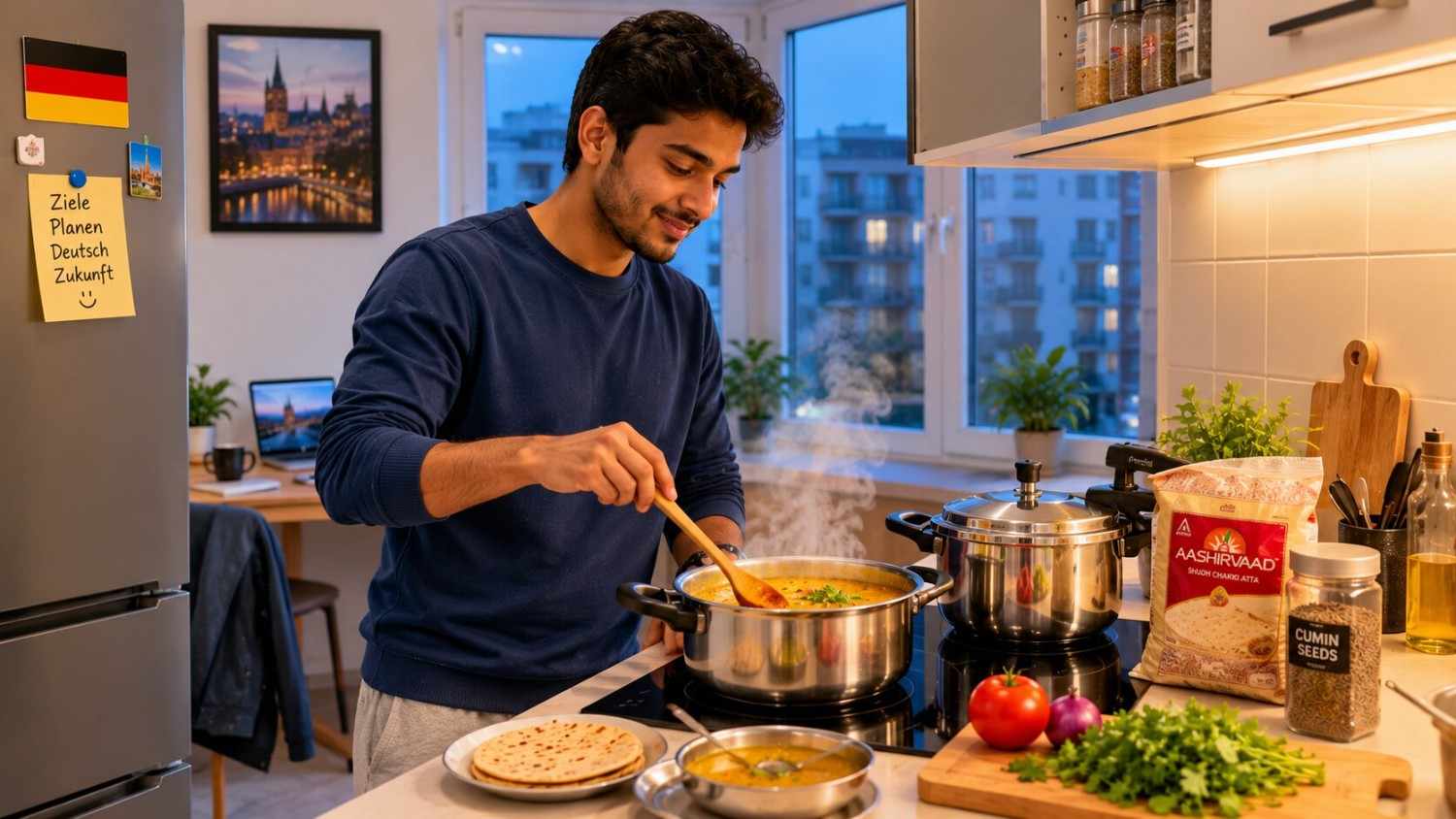
Invest early in a pressure cooker if your shared kitchen does not have one. It is the single most useful cooking tool for Indian food and makes dal, rajma, and rice much faster to prepare. A basic pressure cooker in Germany costs €25 to €50 at REWE, Kaufland, or Amazon.de.
📌 The Bigger Picture
Food is one of the adjustment points of living abroad - not the biggest, but a real one. Every Indian student who has made this journey and stayed says the same thing: the first month is the hardest, and after that you build a routine, find your shops, and start cooking properly. The food situation in Germany is genuinely manageable. It is not a reason to hesitate about the Ausbildung opportunity.
📞 Book Your Free Consultation - Jet Set Jobs × Destination Germany
Call / WhatsApp: +91 96259 66817
Email: support@jetsetjobs.in | www.jetsetjobs.in
Ausbildung Programme Germany 2027
Eligibility: Age 18–25 | Class 12 pass | Science background preferred
Programme Fee: ₹2,50,000 + GST in 3 instalments
Free German A1–B2 training included | Stipend: €1,000–€1,300/month