🛡️ Licensed by Ministry of External Affairs · RA:
B-3413/DEL/COM/1000+/5/11419/2026
📞 +91 96259 66817
📍 15, 2nd Floor, South Patel Nagar, Delhi-110008
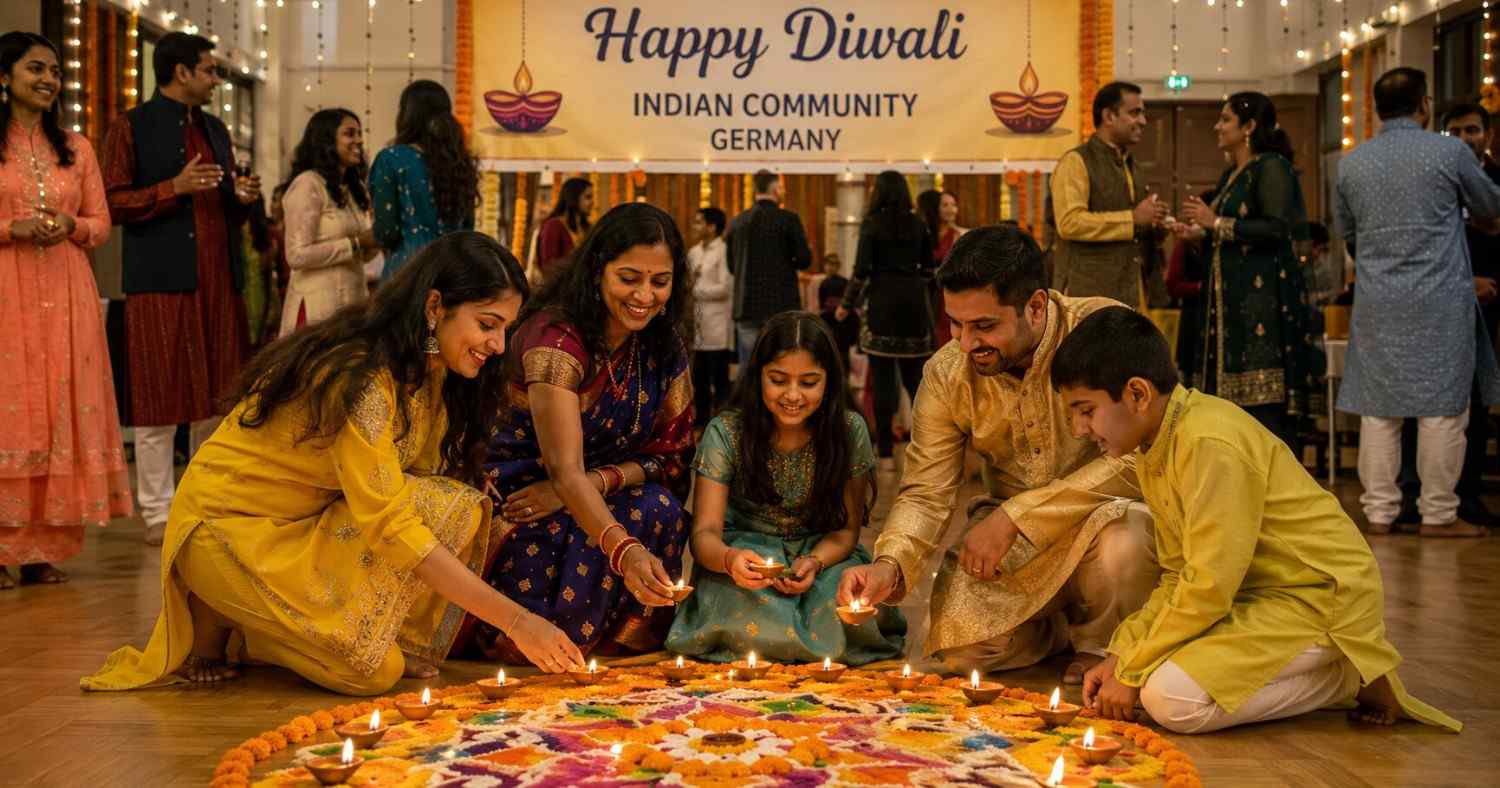
Beyond salary, visa, and recognition, there is a quieter question that weighs on every physiotherapist considering a move to Germany: will I feel at home there? Will I find my food, my people, my festivals? Will my parents be able to visit and feel comfortable? Will my children grow up connected to their roots? These questions matter enormously, especially for Indians who make life decisions with family at the centre.
This blog answers them honestly. Germany is not India - there will be adjustment, and we will not pretend otherwise. But Germany also has a substantial and welcoming Indian community, and the practical elements of Indian life - food, faith, festivals, friendship - are far more accessible than many people expect.
The Indian community in Germany has grown significantly over the past decade, driven by IT professionals, students, engineers, doctors, nurses, and increasingly allied health professionals like physiotherapists. Indians are now one of the larger and faster-growing immigrant communities in Germany, and the community infrastructure - associations, cultural groups, religious centres, and social networks - has grown alongside.
| City / Region | Indian Community Presence | Notes |
|---|---|---|
| Frankfurt | Very Large | Major hub - Indian businesses, temples, restaurants, large diaspora |
| Munich | Large | Strong professional community, Indian associations and events |
| Berlin | Large | Diverse, growing community with cultural organisations |
| Cologne / Düsseldorf | Large | Significant Indian presence, good Indian infrastructure |
| Stuttgart | Moderate–Large | Engineering hub with established Indian community |
| Eastern cities (Dresden, Leipzig, Erfurt) | Growing | Smaller but increasing - community building through new arrivals |
This is often the biggest practical worry, and the reassuring reality is that Indian food is widely available across Germany. Most mid-sized and large German cities have Indian grocery stores stocking everything from atta, dal, and rice to spices, frozen parathas, paneer, Indian snacks, and regional specialities. Where physical stores are limited - in smaller eastern cities - online Indian grocery delivery services ship across Germany.
| Food Need | Availability in Germany | How to Access |
|---|---|---|
| Indian groceries (atta, dal, spices, rice) | Widely available | Indian grocery stores in cities; online delivery everywhere |
| Fresh vegetables (Indian style) | Available | German supermarkets + Turkish/Asian grocers for specific items |
| Paneer, Indian dairy | Available | Indian and Turkish stores; some German supermarkets |
| Indian restaurants | Available in most cities | North Indian, South Indian, and regional options in larger cities |
| Vegetarian / Jain food | Manageable | Cook at home easily; some restaurants cater; read labels carefully |
| Halal meat | Widely available | Turkish butchers and halal shops common across Germany |
German supermarkets like Rewe, Edeka, Aldi, and Lidl carry a surprising range of items useful for Indian cooking, and Turkish and Middle Eastern grocery stores (very common in Germany) stock many overlapping ingredients - lentils, rice, spices, fresh herbs, and halal meat. Between Indian stores, Turkish grocers, German supermarkets, and online delivery, eating the food you are used to is entirely achievable.
Religious and spiritual life is accessible for Indians of all faiths in Germany. The community has established places of worship across the country:
For festivals and major religious occasions, the community often gathers at these centres, and even in smaller cities, Indians travel to nearby larger cities for important celebrations. Faith and spiritual practice need not be left behind when you move to Germany.
Indian festivals are celebrated actively across Germany, organised by community associations, temples, student groups, and cultural organisations. Diwali, Holi, Eid, Onam, Navratri, Durga Puja, Ganesh Chaturthi, Vaisakhi, and other festivals are marked with gatherings, food, music, and cultural programmes in cities with Indian communities.
| Festival | How It's Celebrated in Germany |
|---|---|
| Diwali | Community gatherings, temple celebrations, cultural events in most cities |
| Holi | Outdoor Holi events organised in many German cities, often large and popular |
| Durga Puja / Navratri | Bengali and broader Indian associations organise pandals and celebrations |
| Eid | Celebrated within the large Muslim community across Germany |
| Onam / Pongal / regional festivals | Regional associations (Malayali, Tamil, etc.) organise celebrations |
| Ganesh Chaturthi | Temple and community celebrations in cities with Maharashtrian communities |
Larger cities have bigger, more numerous celebrations; smaller cities have more modest gatherings or community members travelling to nearby cities. Either way, you will be able to celebrate the occasions that matter to you and pass those traditions on to your children.
It would be dishonest to suggest there is no cultural adjustment in moving to Germany. There is. German culture is more reserved and private than Indian culture - people are polite and correct but generally take longer to form close friendships. Punctuality is taken very seriously. Rules and processes are followed precisely. Sundays are quiet, with most shops closed. Direct communication is valued - Germans say what they mean, which can initially feel blunt to those used to more indirect Indian communication styles.
None of these are negatives - they are differences, and most Indians adjust to them within months and come to appreciate many of them. The structure, reliability, work-life balance, and respect for personal time that characterise German culture are frequently cited by Indian professionals as things they grow to value deeply. The adjustment is real but manageable, and the Indian community provides a cultural anchor while you settle into German life.
Your parents can visit you in Germany on a visitor visa, and many Indian families have parents visit for extended periods, particularly to help during the early months or when children are young. Germany is safe, well-organised, and has excellent public infrastructure that makes it comfortable for visiting elderly parents.
For those raising children in Germany, the public education system is free and of good quality, healthcare for children is comprehensive, and the environment is safe. Indian children in Germany typically grow up bilingual or trilingual, integrate well, and maintain their cultural roots through community connections, festivals, and family. Many Indian parents specifically value the safety, structure, and opportunities Germany offers their children.
Beyond the Indian community, building a broader social life in Germany comes through work colleagues, neighbours, hobby groups (Vereine - clubs are a big part of German social life), and language exchange meetups. Your German language ability - which you will have developed to B2 through the programme - is the key that unlocks deeper social integration. The better your German, the more easily you build friendships with German colleagues and neighbours, and the richer your life in Germany becomes.
Many Indian physiotherapists find that their workplace becomes an important social anchor - German healthcare teams are collaborative, and colleagues often become friends over time. Combined with the Indian community for cultural connection, most Indians build a fulfilling social life in Germany within their first year.
📞 Book Your Free Counselling Session
Call / WhatsApp: +91 96259 66817 | +91 98100 08070
Email: support@jetsetjobs.in | www.jetsetjobs.in
500+ healthcare professionals are on their way to Germany & Austria with us.
Settle Abroad with Jet Set Jobs