🛡️ Licensed by Ministry of External Affairs · RA:
B-3413/DEL/COM/1000+/5/11419/2026
📞 +91 96259 66817
📍 15, 2nd Floor, South Patel Nagar, Delhi-110008
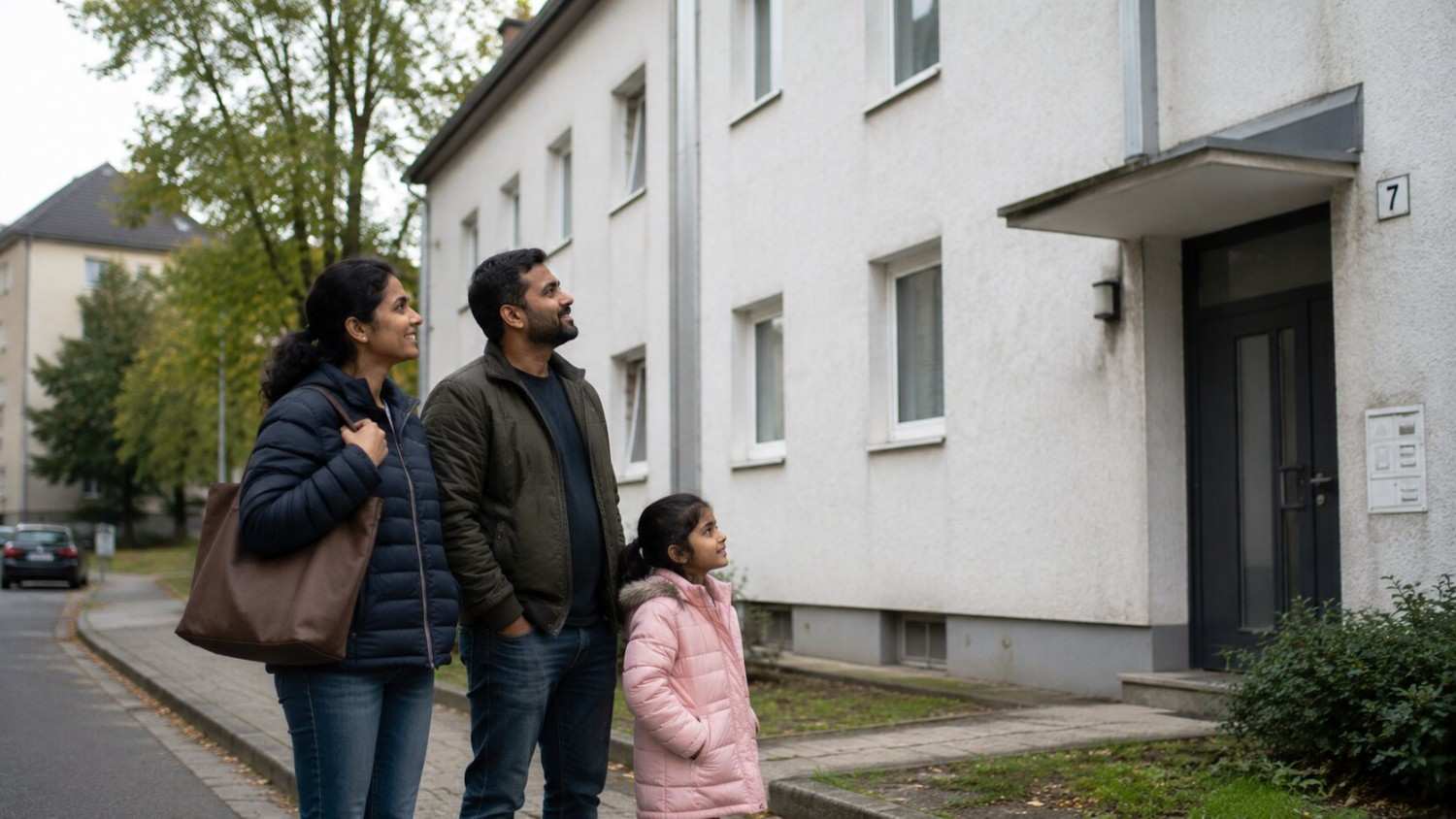
Germany places no restrictions on foreign nationals owning property. EU citizen, non-EU citizen, someone who has never set foot in the country - all can hold title. The Grundbuch (land register) records ownership regardless of nationality, and German property law treats you exactly like a German buyer. One important clarification, because it is a common myth: owning property does NOT give you any right to live in Germany. Your residence permit is a completely separate matter.
This is where reality bites. German banks lend to foreign nationals routinely - but how much they lend depends heavily on your residency status and stability:
| Your status | Typically how much a bank will lend |
|---|---|
| Permanent residence (Niederlassungserlaubnis) | Treated essentially like a German citizen - up to 80–100% possible |
| Resident, non-EU, temporary permit, stable German income | Possible, but expect a larger deposit and more scrutiny |
| Living outside Germany | Typically only 50–60% - meaning 40–50% deposit in cash |
Two more rules that quietly decide everything: banks generally cap your mortgage payment at about 35% of your gross monthly income, and they need proof of income, a valid residence permit, a German bank account and a SCHUFA record. As a newcomer with no SCHUFA history and a temporary permit, you are simply not the profile a German lender is looking for - yet.
This is the single biggest shock, and the reason short-term buying rarely makes sense in Germany. On top of the purchase price you pay Kaufnebenkosten of roughly 10–15% - and crucially, banks will not finance these. You pay them in cash. They are:
On a €300,000 flat, that is roughly €30,000–€45,000 in cash - before any deposit. And if the bank values the property below the asking price (common), you cover that gap in cash too.
Coming from India, where owning a home is often the definition of having made it, German attitudes can feel strange: renting long-term is completely normal and respectable in Germany, tenants have strong legal protection, and plenty of well-paid German professionals rent their whole lives. You are not behind because you rent. Given the 10–15% entry costs, buying generally only makes financial sense if you plan to stay in that property for a long stretch - commonly reckoned at ten years or more.
📞 Book Your Free Consultation
Call / WhatsApp: +91 96259 66817
Email: support@jetsetjobs.in | www.jetsetjobs.in
500+ nurses are on their way to Germany & Austria with us. Free B2 training. Zero recruitment fees.