🛡️ Licensed by Ministry of External Affairs · RA:
B-3413/DEL/COM/1000+/5/11419/2026
📞 +91 96259 66817
📍 15, 2nd Floor, South Patel Nagar, Delhi-110008
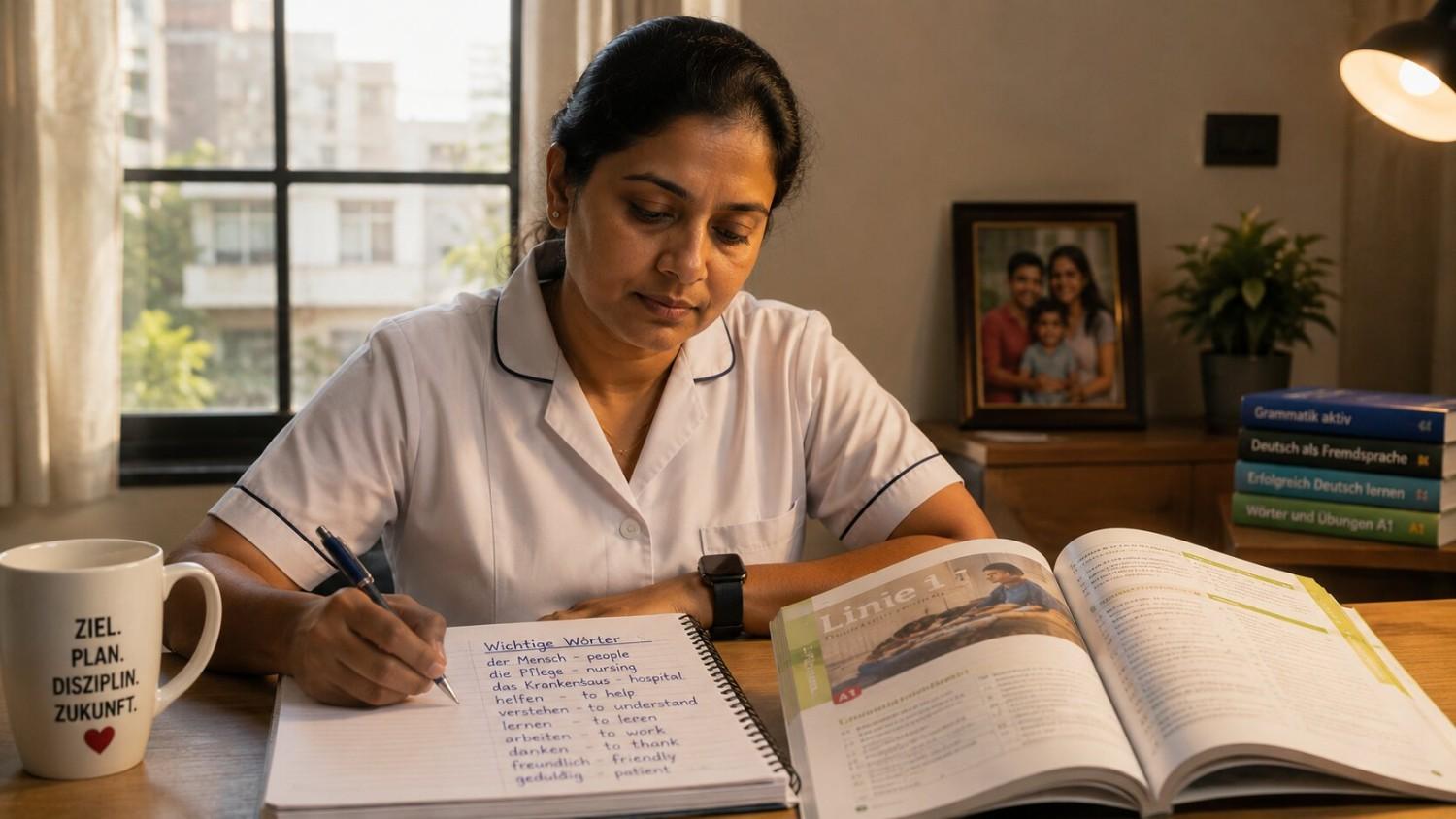
Germany does not impose a specific age cut-off for internationally trained nurses who want to work there. There is no law that says "nurses above 35 cannot apply" or "you must be under 30 to get a nursing visa." The German nursing shortage is real and severe — Germany needs skilled nurses, and age is not the filter they use.
What Germany does require is that you meet the professional qualifications (GNM or BSc Nursing from an INC-recognised institution), pass the German language exam at B2 level, and go through the Berufsanerkennung (professional recognition) process. None of these requirements changes based on your age.
That said, age does interact with certain parts of the process — particularly the visa type and the practicalities of the language learning journey. Understanding these nuances is what this blog is about.
There are two main visa pathways for Indian nurses going to Germany for work:
This visa allows you to travel to Germany while your professional recognition (Berufsanerkennung) is still in progress. It is the most common route for Indian nurses because most arrive before receiving full recognition. There is no age limit on this visa. It is available to any internationally trained nurse who has a job offer from a German employer and meets the language requirement.
This visa is for nurses who already have full recognition of their nursing qualification before they travel. Again, there is no age restriction built into this visa type for nurses. The requirements are the same regardless of whether you are 25 or 45.
The Berufsanerkennung (professional recognition) process compares your nursing qualification to the German standard. It evaluates your degree, your clinical training hours, and the subjects you studied. It does not ask your age. A GNM nurse who graduated at 22 and a GNM nurse who graduated at 28 go through exactly the same recognition process.
The only scenario where age indirectly affects recognition is if there is a significant gap between when you completed your nursing training and when you are applying. A nurse who completed her GNM in 2005 and has been working in a different field since then may face questions about whether her clinical knowledge is current. This is not an age issue per se — it is a recency-of-practice issue. If you have been actively working as a nurse, this concern does not apply regardless of your age.
Even though there is no legal age barrier, experienced nurses in their 30s and 40s often face different practical realities compared to nurses in their mid-20s. Being honest about these differences is more useful than simply saying "age doesn't matter."
Learning a new language as an adult takes time and consistent effort. The A1 to B2 German journey at Jet Set Jobs takes 10 to 12 months with 48 weeks of structured training. This timeline is the same for all candidates. However, nurses with significant family and work commitments — which are more common among nurses in their 30s and 40s — sometimes find it harder to maintain consistent study hours alongside existing responsibilities. This is a scheduling and commitment challenge, not an age-based learning limitation.
Nurses in their 30s are more likely to have spouses and children to consider. Moving to Germany is a life decision that affects the whole family, not just the nurse. Germany does allow family reunification — spouses and dependent children can follow after the nurse has settled — but this takes additional planning, paperwork, and financial preparation. Nurses who factor this in from the start are better positioned than those who treat it as an afterthought.
A nurse with 8 to 12 years of experience brings significant clinical depth to a German hospital or care home. German employers understand this and often welcome experienced nurses. Having a strong track record in ICU, OT, or ward nursing in India is an asset, not a liability. Experience does not become a problem at any age.
| Age Range | Typical Profile | Any Restrictions? |
|---|---|---|
| 22–26 | Fresh GNM/BSc graduates, first career move | None |
| 27–32 | 2–7 years experience, considering growth | None |
| 33–38 | Experienced nurses, career change motivation | None — very common profile |
| 39–45 | Senior nurses, long-term planning | No law against it — assess family/commitments |
| 46+ | Rare but not impossible | No law against it — assess case by case |
The 27–38 age range is actually one of the most common among JSJ candidates. These nurses have enough experience to be valued by German employers, enough language-learning capacity to reach B2, and enough career runway ahead of them to make the journey worthwhile.
When nurses ask "Is there an age limit?", they are often really asking: "Is it too late for me? Will I make it? Is this worth starting now?" That is a different question — and the honest answer depends on individual circumstances, not on any legal age restriction.
A 35-year-old nurse who starts German training today and completes B2 in 12 months will be 36 when she reaches Germany. She will likely spend 12 to 18 months completing recognition and settling in. By 37 or 38, she is a fully recognised, fully paid registered nurse in Germany earning €3,300–€3,500 gross per month with permanent residency on a clear horizon. That is 20 to 25 years of high-quality career ahead of her — in a country that values nurses, compensates them well, and offers genuine long-term stability.
Whether that is "worth it" is a personal calculation. But it is not a question of age limits.
📞 Book Your Free Consultation
Call / WhatsApp: +91 96259 66817
Email: support@jetsetjobs.in | www.jetsetjobs.in
500+ nurses currently learning German with JSJ. Free B2 training. Zero recruitment fees.