🛡️ Licensed by Ministry of External Affairs · RA:
B-3413/DEL/COM/1000+/5/11419/2026
📞 +91 96259 66817
📍 15, 2nd Floor, South Patel Nagar, Delhi-110008
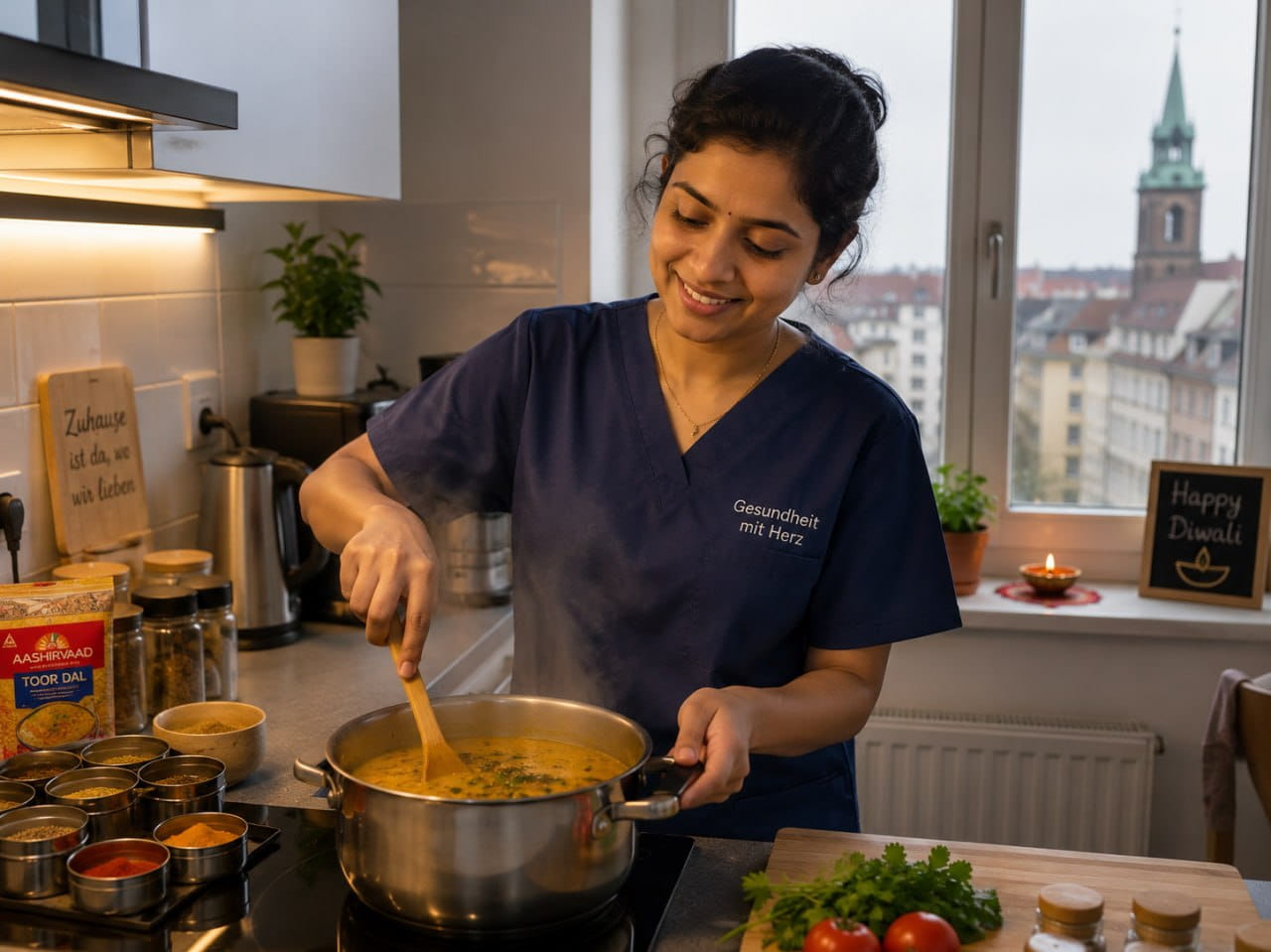
The professional side of working in Germany is well documented. The salary, the recognition process, the visa — these are covered extensively. What nurses ask us about most personally is the daily life side: the food, the festivals, the community, the feeling of belonging.
This blog answers those questions honestly — drawing from the real experiences of Indian nurses currently living and working in Germany.
This is the concern that comes up most often — and the one that resolves fastest after arrival. Indian food in Germany is genuinely accessible, particularly in cities and larger towns.
Every major German city has at least one Indian or South Asian grocery store. Frankfurt, Stuttgart, Cologne, Berlin, Hamburg, and Munich all have multiple well-stocked Indian supermarkets. You will find:
Even in smaller towns, Indian nurses typically find one Asian supermarket within a 20–30 minute commute. Online delivery of Indian groceries is also available across Germany through platforms like Amazon.de — for those in truly rural areas.
The vast majority of Indian nurses in Germany cook at home regularly — and most report that cooking Indian food has become a deeply important part of their daily routine. It is comfort, familiarity, and identity all at once. German kitchen equipment is excellent, and most WG (shared flat) kitchens are fully equipped.
The one practical difference: Indian cooking involves more oil and stronger aromas than German cooking. Some German flatmates or landlords may raise concerns about cooking smells. Most experienced nurses handle this with good ventilation — opening windows and using the kitchen exhaust fan during cooking. It is rarely a serious problem.
Indian restaurants exist in virtually every German city. Quality varies — some are excellent, some are standard European-Indian adaptations. Most major cities have multiple Indian restaurants run by Indian families, with authentic regional cuisine. South Indian, Punjabi, and North Indian restaurants are all present in cities like Frankfurt and Stuttgart.
India is one of the largest non-European immigrant communities in Germany. The Indian diaspora in Germany exceeds 200,000 people — concentrated primarily in cities like Frankfurt, Stuttgart, Munich, Cologne, Düsseldorf, and Berlin.
There are active WhatsApp groups specifically for Indian nurses in Germany — city-specific and state-specific. These communities are invaluable: practical information about specific hospitals, flat shares, local Indian stores, German administrative processes, and the emotional support of people who understand exactly what you are going through.
Before you travel, search Facebook for "Indian Nurses in Germany", "Indians in [your city]", and "Indian Healthcare Workers Germany". Join before you arrive — the community is welcoming and the practical value is immediate.
Indian festivals do not disappear when you move to Germany — they simply become more intentional and, for many nurses, more meaningful.
| Festival | How It Is Celebrated in Germany |
|---|---|
| Diwali | Celebrated widely in cities with large Indian communities — Indian organisations host events, temples hold puja, Indian nurses gather at each other's homes. Many German colleagues are curious and interested. |
| Holi | Informal celebrations in Indian community groups — some cities host organised Holi events |
| Onam / Pongal / regional festivals | Celebrated within Kerala/Tamil communities — most major cities have regional Indian associations |
| Eid | Large Muslim community in Germany — Eid is widely celebrated and halal food is readily available in all major cities |
| Christmas | Germany celebrates Christmas extensively — markets, lights, Glühwein. Many Indian nurses report genuinely enjoying German Christmas culture as a new experience |
| New Year | Celebrated across Germany — cities have public events and fireworks |
German social culture is more reserved than Indian culture. Germans tend to be quieter in public, maintain more personal space, and take longer to form close friendships. This can feel cold or unfriendly to Indian nurses in the first few months — but it is cultural, not personal.
Once a German colleague or neighbour gets to know you — typically after 2–3 months of regular interaction — friendships become genuine, warm, and lasting. German friends are not numerous but they are reliable. Many Indian nurses describe their German colleagues as among the most dependable people they have ever worked with.
📞 Book Your Free Consultation
Call / WhatsApp: +91 96259 66817 | support@jetsetjobs.in | www.jetsetjobs.in
583+ candidates have started their Germany journey with us. Refundable ₹75,000 deposit. Zero placement fees. MEA licensed.