🛡️ Licensed by Ministry of External Affairs · RA:
B-3413/DEL/COM/1000+/5/11419/2026
📞 +91 96259 66817
📍 15, 2nd Floor, South Patel Nagar, Delhi-110008
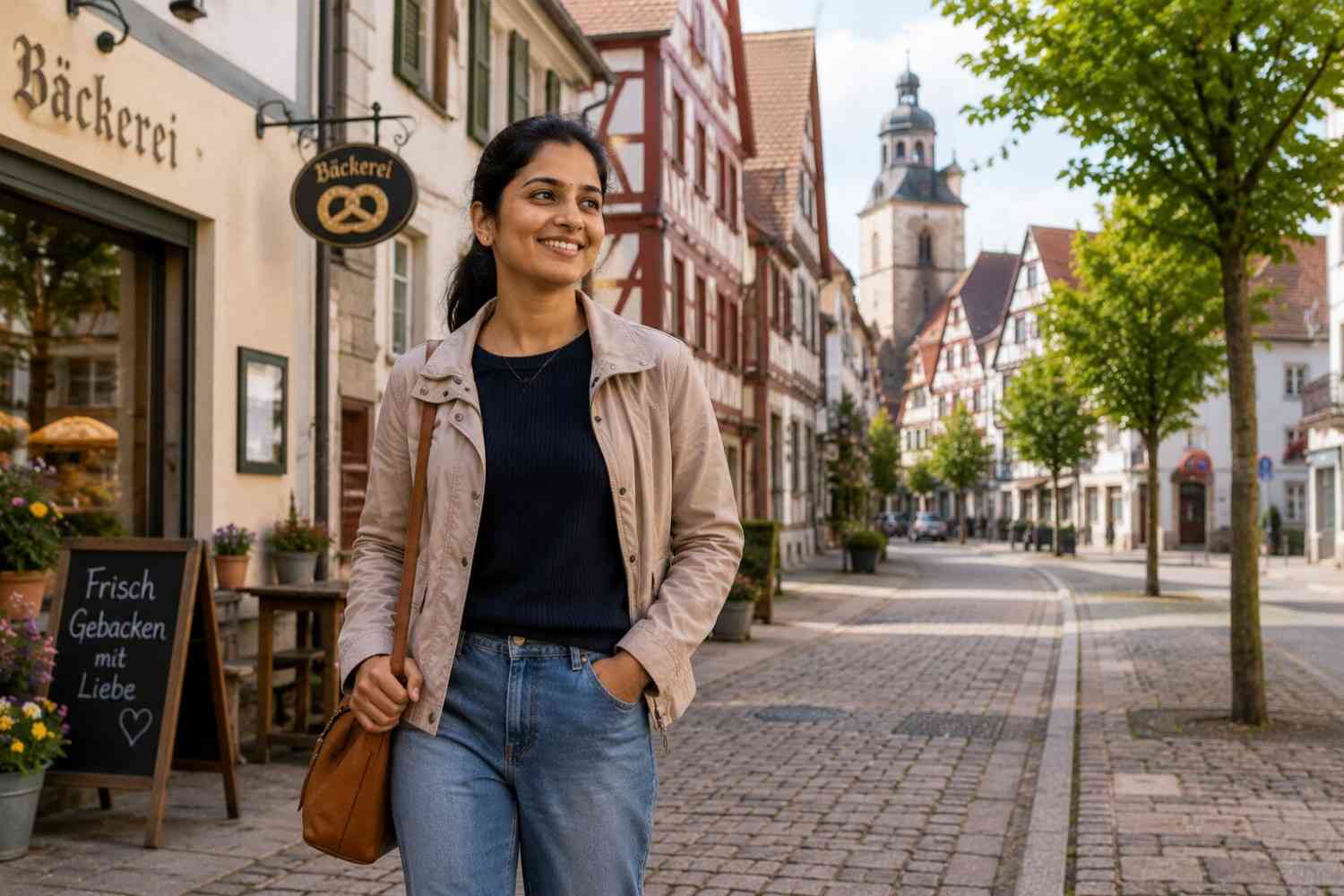
Before going to Germany, almost every Indian nurse has a picture in their mind of what it will be like — and that picture is usually formed by social media posts from Frankfurt or Munich, not from Erfurt or Suhl. The Germany most Indian nurses actually experience is quieter, more affordable, more manageable, and in many ways more welcoming to newcomers than the major German cities.
| City / Town | State | Population | Character |
|---|---|---|---|
| Erfurt | Thuringia | ~215,000 | State capital; historic old town; good transport links; most international city in Thuringia |
| Jena | Thuringia | ~110,000 | University city; young population; lively but manageable |
| Weimar | Thuringia | ~65,000 | Small, historic, cultural — quiet but charming |
| Suhl / Hildburghausen | Thuringia | ~35,000–40,000 | Very small; tight-knit hospital community; lowest cost of living |
| Dresden | Saxony | ~560,000 | Larger city; beautiful; strong Indian community; more amenities |
| Chemnitz | Saxony | ~245,000 | Affordable; growing; practical city with good hospital infrastructure |
| Zwickau | Saxony | ~90,000 | Small industrial city; affordable; quieter lifestyle |
These are not glamorous cities by international standards. They are clean, safe, functional German cities where life is affordable, public services work reliably, and the pace of life is genuinely manageable for someone new to Germany.
German hospitals operate on shift systems — morning shifts (Frühschicht), late shifts (Spätschicht), and night shifts (Nachtschicht). As a newly arrived nurse in the adaptation period, you will work under supervision initially. This is structured support, not surveillance — it is how the German recognition system ensures patient safety during the transition.
| Work Culture Aspect | What to Expect |
|---|---|
| Punctuality | Non-negotiable — arrive a few minutes early for every shift |
| Communication style | Direct and factual — Germans say what they mean without social padding |
| Team dynamics | Professional but warm once trust is established; colleagues become genuine support systems |
| Break culture | Designated breaks are taken seriously — German workers do not skip breaks or eat at their desks |
| Overtime | Regulated — typically compensated as time off or paid; not culturally expected like in India |
| Performance feedback | Honest and direct — if something needs improvement, you will be told clearly and early |
| Language expectations | Colleagues will speak German with you — this is essential for your learning; do not retreat into English |
German cities — even small ones — have a very distinct weekend culture. Sundays are quiet: most shops are closed, supermarkets are shut, and the streets are calm. Plan your grocery shopping on Saturday. Sunday is for rest, nature, and social time.
Weekends in smaller German cities typically involve:
Yes — more easily than you might expect. Every German city of reasonable size has at least one Asian grocery shop or Indian/Pakistani food store where you can find basic dals, rice varieties, spices, atta, and frozen items. Supermarkets (REWE, EDEKA, Aldi, Lidl) carry a reasonable range of international ingredients. Amazon.de has a good selection of Indian groceries for items harder to find locally.
The first 3 to 6 months in Germany can be lonely. This is true for almost every internationally placed worker, regardless of nationality. You are away from family, in a new culture, communicating in a language you are still learning. This is normal, and it passes — but only if you actively build connections rather than waiting for them to happen.
JSJ maintains WhatsApp support groups for placed nurses, and our team is reachable during the adjustment period. You are not dropped off in Germany and forgotten.
Smaller German cities are among the safest urban environments in Europe. Crime rates in cities like Erfurt, Jena, Chemnitz, and Weimar are very low by international standards. Indian nurses — male and female — report feeling safe walking alone at night, using public transport at late hours, and living in neighbourhoods without gates or guards.
The emergency number is 112 (works across Europe). For non-emergency police, the number is 110.
The nurses who thrive in Germany are almost always the ones who commit to integration rather than insulating themselves within an Indian bubble. This does not mean abandoning Indian culture — it means adding German culture alongside it. Eating schnitzel alongside dal. Watching German TV alongside Bollywood. Making German friends alongside staying close to Indian colleagues.
By year two, most JSJ nurses describe Germany as feeling genuinely like home — not a replacement for India, but a real place where they belong. That transition takes effort and time. But it is real, and it is worth it.
📞 Book Your Free Consultation
Call / WhatsApp: +91 96259 66817
Email: support@jetsetjobs.in | www.jetsetjobs.in
500+ nurses are on their way to Germany & Austria with us. Free B2 training. Zero recruitment fees.