🛡️ Licensed by Ministry of External Affairs · RA:
B-3413/DEL/COM/1000+/5/11419/2026
📞 +91 96259 66817
📍 15, 2nd Floor, South Patel Nagar, Delhi-110008
When Indian nurses begin researching nursing abroad, two countries consistently come up: Germany and the UK. The UK has been a destination for Indian nurses for decades - the NHS is familiar, English is the language, and the cultural connection between India and the UK runs deep. Germany is newer as a destination for Indian nurses but is growing rapidly, and for good reason.
This is not a blog that tells you Germany is perfect and the UK is wrong - both have real advantages. What we will do is lay out the genuine differences so you can make an informed decision based on facts rather than assumption.
The single most common reason Indian nurses choose the UK over Germany is the language. English is comfortable, familiar, and does not require a year of learning. This is a real and understandable advantage for the UK.
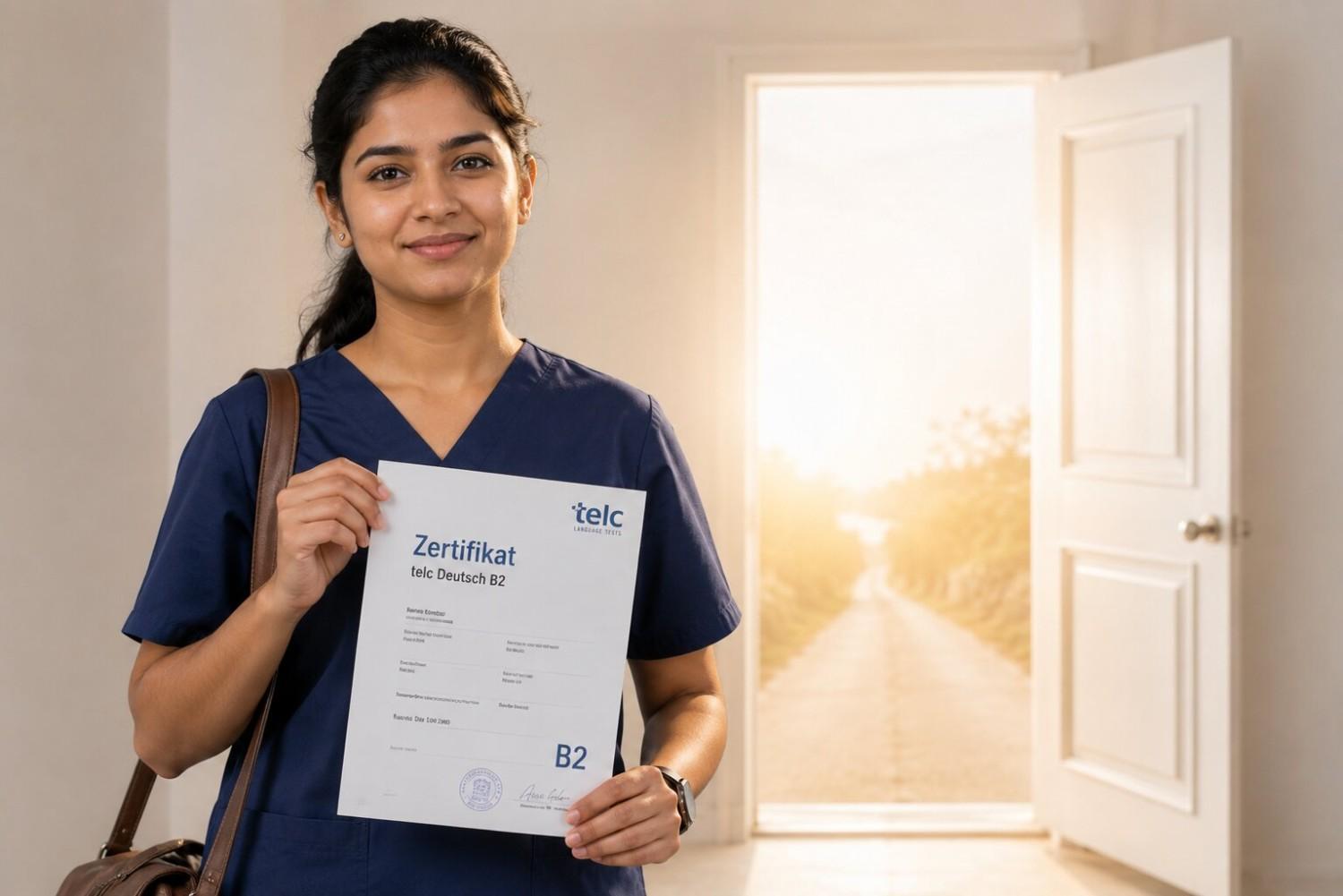
However, consider what the language investment actually means. German language training to B2 level takes 10 to 12 months. That is one year. After that year, you are qualified for a German hospital job, earn a European salary, and begin building a life in one of the world's most stable economies. The year of language learning is a one-time investment that pays dividends for the rest of your career.
| Factor | Germany | UK |
|---|---|---|
| Language requirement | German B2 - 10–12 months of training | OET or IELTS Academic - formal exam in English |
| Visa route | Section 16d Recognition Visa - straightforward for nurses with COL | Skilled Worker Visa - requires NMC registration before entry; complex pre-arrival process |
| Nursing registration | Berufsanerkennung happens after arrival; adaptation period in Germany | NMC registration required before entering UK - lengthy process from India |
| Time from decision to departure | 12–18 months (language + visa) | 12–24 months (OET + NMC registration + visa) |
| Starting salary (gross) | €2,800–€3,000/month (~₹2.5–2.7L/month) | £28,000–£32,000/year gross (~₹1.9–2.2L/month) |
| Take-home salary | ~€1,800–€1,950/month after deductions | ~£1,800–£2,100/month after UK tax and NI |
| Cost of living | Lower - especially in smaller German states (Thuringia, Saxony) | Higher - especially in cities where NHS hospitals are concentrated |
| Savings potential | Higher - particularly in smaller German cities | Lower - UK living costs significantly reduce savings |
| Permanent residency | 5 years (or 3 years accelerated) | 5 years Indefinite Leave to Remain (ILR) |
| Dual citizenship | Yes - allowed since 2024 | No - UK requires giving up Indian citizenship for naturalisation |
| Job security | Stable and growing - structural demographic shortage | NHS has faced recruitment freezes and budget pressure post-Brexit |
| Family reunification | Possible after qualifying period; manageable in affordable German cities | Possible but UK cost of living makes family support challenging |
At first glance, German and UK nursing salaries look similar in absolute numbers. But the comparison that actually matters is what you take home after deductions and what remains after living costs.
In a smaller German city like Erfurt or Chemnitz, a nurse earning €1,900 net per month with rent of €400 can save €1,000 to €1,200 per month. In London or Birmingham, a nurse earning £1,900 net with rent of £800 to £1,200 may struggle to save anything meaningful in the first few years.
One aspect of the UK route that surprises many nurses is the complexity of NMC (Nursing and Midwifery Council) registration from India. Before you can even apply for a UK Skilled Worker Visa as a nurse, you must complete NMC registration - which involves an online theoretical assessment, a supervised practice test (OSCE), and the OET language exam.
The OSCE must be taken in the UK, which means you need to either enter on a temporary visa or find an employer who will support your entry for OSCE purposes. By contrast, Germany's Section 16d visa allows you to enter with your B2 certificate and a job offer - and your recognition happens after you arrive, in a structured, employer-supported process.
Germany now permits dual citizenship - since 2024, Indian nurses who become German citizens do not need to give up their Indian passport. The UK does not permit dual citizenship for naturalisation - becoming a British citizen requires surrendering Indian citizenship.
For most Indian nurses, the ability to maintain Indian citizenship while building a European life is a meaningful advantage. It means you can keep property rights in India, maintain family ties formally, and give your children the option of both identities.
| Choose Germany if... | Choose UK if... |
|---|---|
| You are willing to invest 10–12 months in German language learning | You are not able to commit to language learning and English is your preference |
| You want higher savings potential relative to cost of living | You have existing UK connections, family, or a specific employer contact |
| You want a stable, growing healthcare system with long-term demand | You have already completed OET and are deep into the UK process |
| You want permanent residency without giving up Indian citizenship | You are specifically interested in NHS experience for career development |
| You want to place your family in an affordable European city | You prefer a larger, more established Indian community |
At Jet Set Jobs, we work exclusively on the Germany and Austria pathway. But we believe you deserve an honest comparison - and the honest comparison shows that for most Indian nurses starting from scratch, Germany offers a stronger financial case, a more accessible visa route, and greater long-term security.
📞 Book Your Free Consultation
Call / WhatsApp: +91 96259 66817
Email: support@jetsetjobs.in | www.jetsetjobs.in
500+ nurses are on their way to Germany & Austria with us. Free B2 training. Zero recruitment fees.