🛡️ Licensed by Ministry of External Affairs · RA:
B-3413/DEL/COM/1000+/5/11419/2026
📞 +91 96259 66817
📍 15, 2nd Floor, South Patel Nagar, Delhi-110008
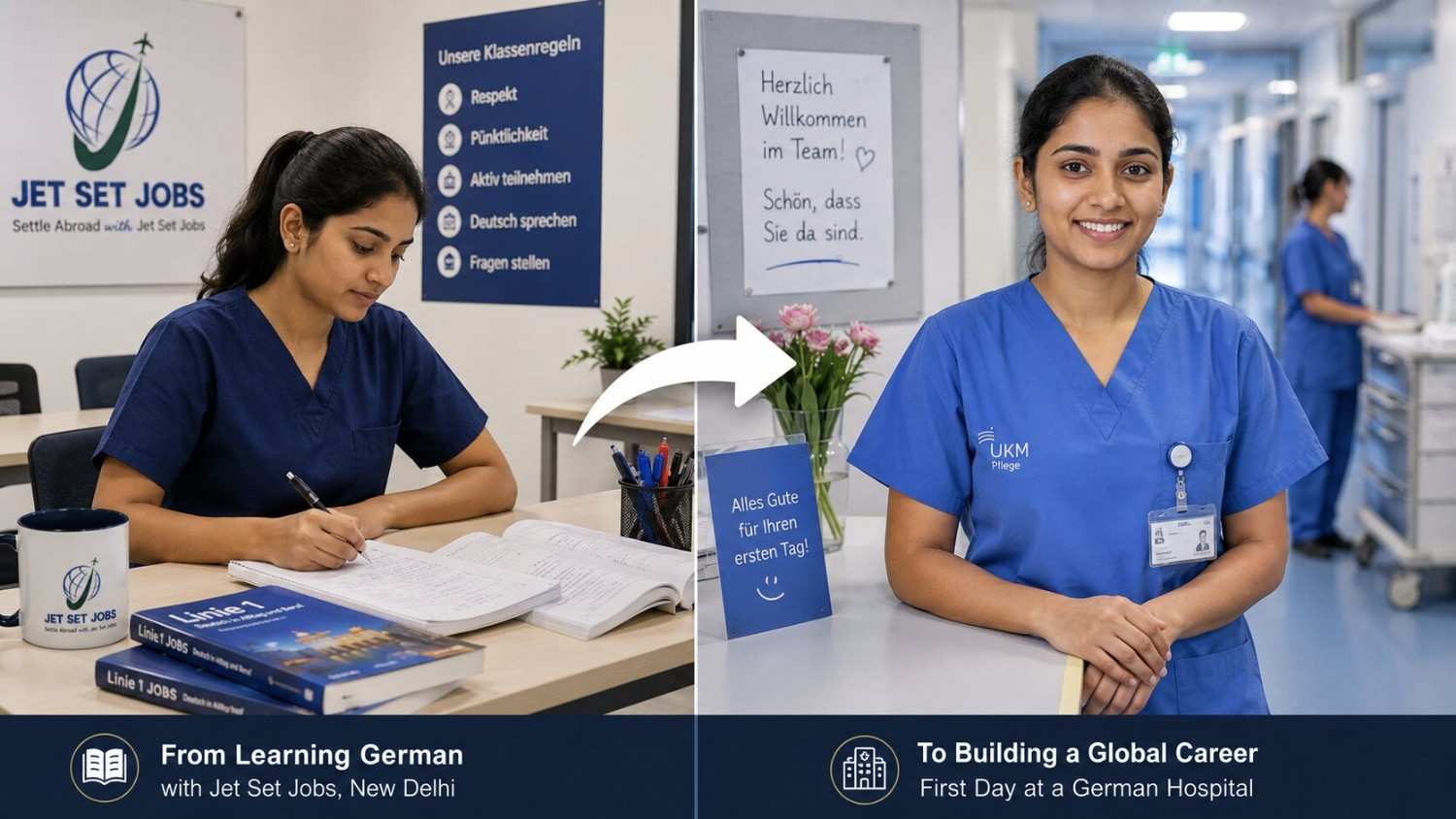
Many nurses imagine they will be placed on one ward and stay there permanently. In Germany, nursing is treated as a profession with a development path. Where you begin is your entry point, not your ceiling. With experience, language and good performance, you can grow into different areas and into more specialised, better-paid roles.
Moving between departments within a hospital is normal and common. It typically happens through conversation with your ward manager and the nursing leadership, based on your interest, the hospital's needs, and your readiness. Some moves are lateral (a different ward at a similar level); others are steps toward a specialty you want to build. The key is that the door is open - you simply grow into it over time rather than demanding it on day one.
Practical reality: when you first arrive, your priority is settling in, completing your recognition (Approbation), and building confidence in German on your starting ward. Once you are established, conversations about changing wards or moving toward a specialty become very natural.
Germany has a structured route to becoming a specialist nurse: Fachweiterbildung, a formal further-training qualification in a chosen field. This is how nurses move into recognised specialties, often with higher responsibility and pay. Common specialisation areas include:
| Specialisation area | What it involves | Typical path |
|---|---|---|
| Intensive care & anaesthesia (ICU) | Caring for critically ill patients | Experience first, then Fachweiterbildung |
| Oncology | Specialist cancer-patient care | On-ward experience plus further training |
| Operating theatre / OR | Specialised surgical/theatre nursing | Often via OTA route or further training |
| Other fields (e.g. psychiatry, geriatrics) | Focused care in a chosen area | Build experience, then specialise |
Because Germany faces a nursing shortage, hospitals have a strong incentive to develop and keep good nurses. Supporting your move into a specialty is in their interest too - a more skilled nurse is more valuable to the ward. Many employers actively encourage further training, and some support it as part of staff development. Your ambition to grow is usually welcomed, not resisted.
As you move toward more specialised roles, stronger German naturally helps - specialist settings involve more complex communication. The B2 you build before arriving is your foundation; your German keeps improving on the job, and that improvement opens more doors. Investing in your language now is investing in your future specialisation.
Over a German nursing career, the progression can be genuinely motivating: from your starting ward, to a department you are passionate about, to a recognised specialty, and potentially into senior or leadership roles. This is one of the quiet rewards of nursing in Germany - it is a long-term profession with a ladder, not a flat, fixed job.
We help nurses see the full picture before they move - not just the first job, but the career it can become. We guide you on realistic expectations: settle first, then grow. We cannot promise a specific specialty or timeline, because that depends on you, your performance and your employer. What we can do is make sure you arrive understanding that German nursing is a career with real room to climb.
📞 Book Your Free Consultation
Call / WhatsApp: +91 96259 66817
Email: support@jetsetjobs.in | www.jetsetjobs.in
500+ nurses are on their way to Germany & Austria with us. Free B2 training. Zero recruitment fees.