🛡️ Licensed by Ministry of External Affairs · RA:
B-3413/DEL/COM/1000+/5/11419/2026
📞 +91 96259 66817
📍 15, 2nd Floor, South Patel Nagar, Delhi-110008
 JET SET JOBS
Settle Abroad with Jet Set Jobs
JET SET JOBS
Settle Abroad with Jet Set Jobs
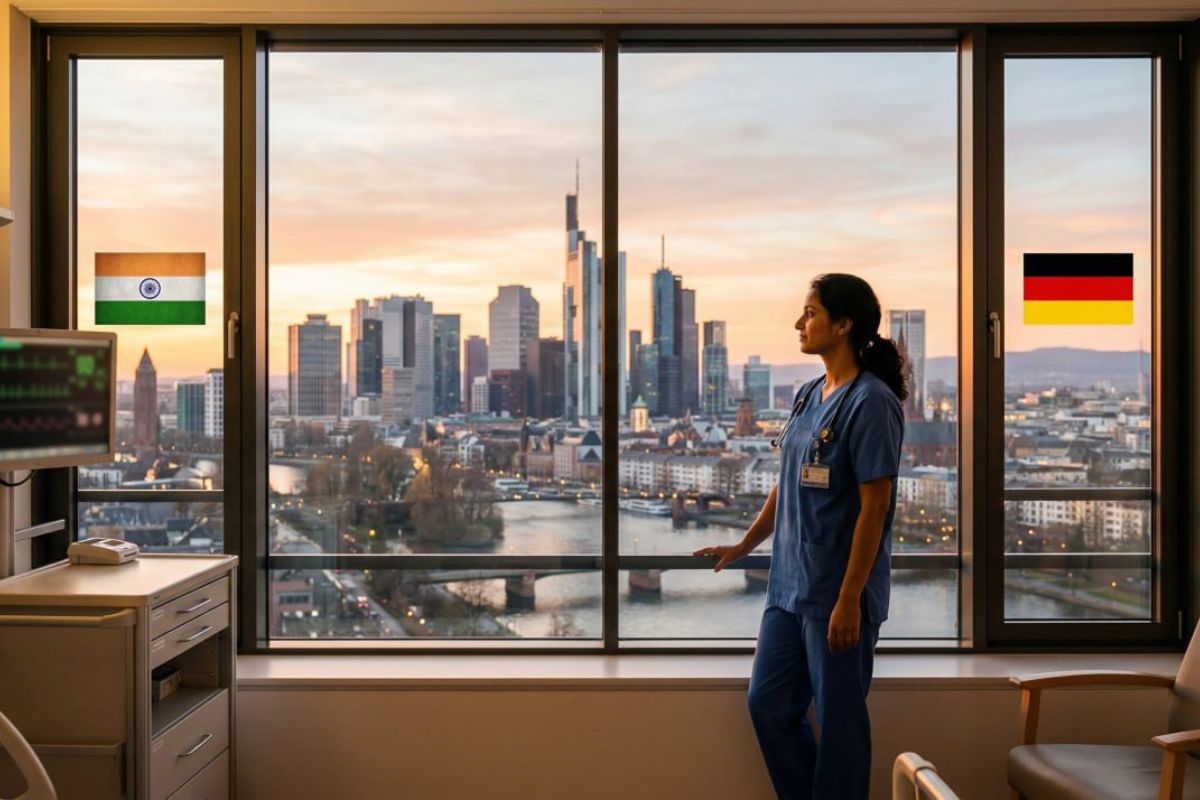
🎯 Germany needs 40,000+ nurses right now. Indian nurses are among the most in-demand internationally. This complete guide covers everything you need to know – eligibility, salary, language, process – in one place.
If you are a GNM or BSc Nursing graduate and have been wondering whether Germany is a realistic option for you – the answer in 2026 is a clear yes. Germany is not just open to Indian nurses, it is actively seeking them. As of June 2025, over 16,600 Indian nurses are already working in German hospitals and care homes, placing India among the top five source countries for nursing staff in Germany.
This guide covers the full picture – so you can go from curious to confident.
Germany has one of the oldest populations in Europe. With over 30% of its citizens expected to be above 65 by 2030, demand for healthcare workers is growing faster than the country can produce them. The nursing shortage currently stands at 30,000 to 40,000 positions – and experts estimate Germany will need an additional 500,000 nurses by 2035.
For decades, Germany filled these gaps with nurses from Eastern European countries like Poland, Romania, and Bosnia. But as living standards in those countries have risen, migration flows have slowed significantly. Germany is now looking east – to India, Indonesia, and the Philippines – and Indian nurses are consistently rated as among the most qualified and committed international candidates.
Yes – with the right qualifications. Here is what you need:
Both GNM and BSc Nursing qualifications are accepted. Your degree is assessed for equivalence with the German 3-year nursing curriculum – a process called Berufsanerkennung (professional recognition). In most cases, Indian nursing degrees meet or come close to the required standard.
These are gross figures. After German taxes and social contributions (approximately 35–40%), take-home pay for a registered nurse is typically €2,900–€3,100 per month. Many employers also provide accommodation support, especially in the first 3–6 months.
For context – the average nurse salary in India is ₹18,000–₹30,000 per month. Even in the recognition phase,
German salaries are 10 times higher.
Step 1 – Learn German to B2 Level This is the first and most important step. Start from A1 and work up to B2 – a process that takes approximately 12–14 months with consistent daily training. At Jet Set Jobs, we run a free residential programme in New Delhi from A1 to B2.
Step 2 – Get Your Documents Ready You will need your nursing degree certificates, State Nursing Council registration, ID proof, and experience letters – all apostilled and translated into German by a certified translator.
Step 3 – Apply for Qualification Recognition Your documents are submitted to the competent authority in your target German state (Landesprüfungsamt). They assess whether your Indian qualification is equivalent to the German standard. This process typically takes 3–6 months.
Step 4 – Secure a Job Offer Once your recognition is underway or completed, employers or placement partners will match you with suitable hospital or care home positions based on your profile and preferences.
Step 5 – Apply for a German Work Visa With a job offer and your documents in order, you apply for a German Skilled Worker Visa at the German Embassy in India. Processing typically takes 6–12 weeks.
Step 6 – Arrive, Work, and Complete Recognition You arrive in Germany, begin work – initially as a nursing assistant if recognition is still pending – and complete any adaptation measures required to receive your full nursing licence (Approbation).
| Phase | Timeframe |
|---|---|
| German Language Training (A1–B2) | 10–12 months |
| Deficit Processing | 1–2 months |
| Visa Processing | 2–3 months |
| Total (approximate) | ~15 months from start |
📞 Book Your Free Consultation Today Call or WhatsApp: +91 96259 66817 Email: support@jetsetjobs.in Website: Jet Set Jobs in 583+ nurses started their journey to Germany with us. Free B2 training. Zero recruitment fees.
Book a free demo class at our Karol Bagh centre or attend online. No commitment. No fees. Just one hour that could change your career.
Karol Bagh, New Delhi – 110008