🛡️ Licensed by Ministry of External Affairs · RA:
B-3413/DEL/COM/1000+/5/11419/2026
📞 +91 96259 66817
📍 15, 2nd Floor, South Patel Nagar, Delhi-110008
 JET SET JOBS
Settle Abroad with Jet Set Jobs
JET SET JOBS
Settle Abroad with Jet Set Jobs
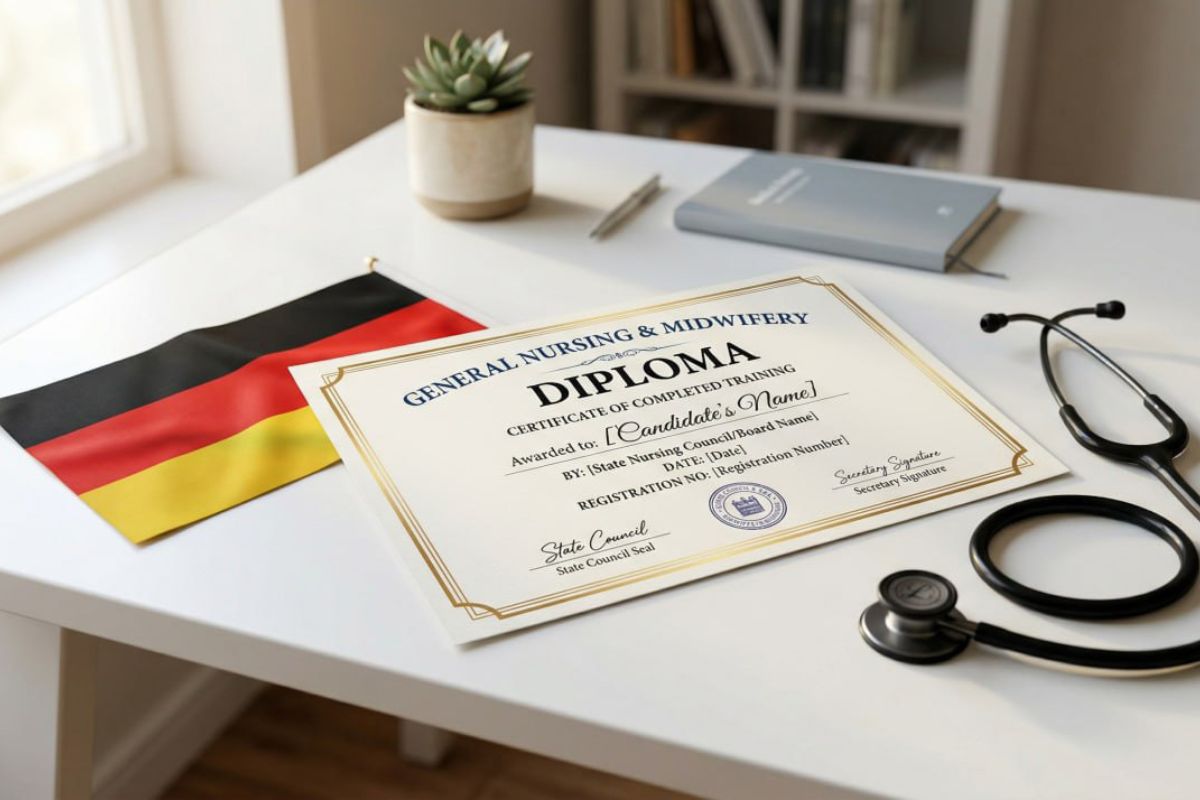
🎯 One of the most common questions we receive: ‘I have a GNM diploma – can I still go to Germany?’ The answer is yes. This blog explains exactly how GNM qualifications are assessed and what you need to do.
The GNM (General Nursing & Midwifery) diploma is one of the most widely held nursing qualifications in India – and a common concern is whether it is recognised in Germany, where nursing education follows a different structure. The good news is that GNM nurses are eligible to work in Germany. But understanding how the recognition process works will save you a lot of confusion
Germany recognises foreign nursing qualifications through a process called Berufsanerkennung – professional recognition. The competent authority in your target German state compares your Indian nursing qualification against the German standard: a 3-year nursing programme covering approximately 4,600 hours of combined theoretical and practical training.
For GNM nurses, this assessment typically results in one of three outcomes:
The majority of GNM graduates from INC-accredited institutions fall into the first or second category – meaning they are eligible, with or without a short adaptation period.
| Factor | GNM Diploma | BSc Nursing |
|---|---|---|
| Programme Duration | 3.5 years | 4 years |
| Typical Recognition Outcome | Full or partial equivalence | Full equivalence in most states |
| Adaptation Required | Sometimes (3–6 months work) | Rarely |
| Eligible for Germany? | ✅ Yes | ✅ Yes |
| Eligible for Direct Job? | ✅ Yes (most cases) | ✅ Yes |
| Ausbildung Option? | ✅ Yes (B1 level) | ✅ Yes |
BSc Nursing holders generally receive smoother recognition simply because the 4-year degree is structurally closer to the German nursing curriculum. However, GNM nurses are not at a disadvantage – thousands of GNM nurses are currently working across German hospitals and care homes.
1. Document Submission
You submit your GNM certificate, mark sheets,
INC/State Nursing Council registration, syllabus, and experience letters to the Landesprüfungsamt (State
Examination Office) of your target German state. All documents must be apostilled and translated into German by
a certified translator.
2. Assessment
The authority compares your GNM curriculum against the German
standard – looking at total training hours, subject coverage (internal medicine, surgery, paediatrics,
psychiatry, geriatrics), and clinical practice hours
3. Decision
You receive a decision letter. If there are gaps – for example,
if your programme had fewer geriatric care hours than the German standard – you will be asked to complete a
supervised practice period (Anpassungslehrgang) or pass a knowledge test (Kenntnisprüfung) after arriving in
Germany.
4. Adaptation (if required)
This takes place in Germany, typically over 3–6
months. You work in a hospital under supervision and are assessed by a qualified German nurse supervisor. After
successful completion, you receive full recognition and can work independently as a registered nurse.
Recognition requirements vary slightly by German state (Bundesland). Some states are known to be more straightforward for GNM applicants. At Jet Set Jobs, we advise our nurses on the most suitable state for their specific qualification and help prepare the documentation accordingly.
Yes – GNM nurses who prefer to enter Germany through the Ausbildung (vocational apprenticeship) route can do so with B1 German. The Ausbildung takes 3 years, during which you are paid a stipend of €1,000–€1,300 per month and receive your German nursing qualification at the end. This route is slower but results in a German nursing licence with no recognition uncertainty.
📞 Book Your Free Consultation Today Call or WhatsApp: / +91 96259 66817 Email: support@jetsetjobs.in Website: Jet Set Jobs in 583+ nurses started their journey to Germany with us. Free B2 training. Zero recruitment fees.
Book a free demo class at our Karol Bagh centre or attend online. No commitment. No fees. Just one hour that could change your career.
Karol Bagh, New Delhi – 110008