🛡️ Licensed by Ministry of External Affairs · RA:
B-3413/DEL/COM/1000+/5/11419/2026
📞 +91 96259 66817
📍 15, 2nd Floor, South Patel Nagar, Delhi-110008
 JET SET JOBS
Settle Abroad with Jet Set Jobs
JET SET JOBS
Settle Abroad with Jet Set Jobs
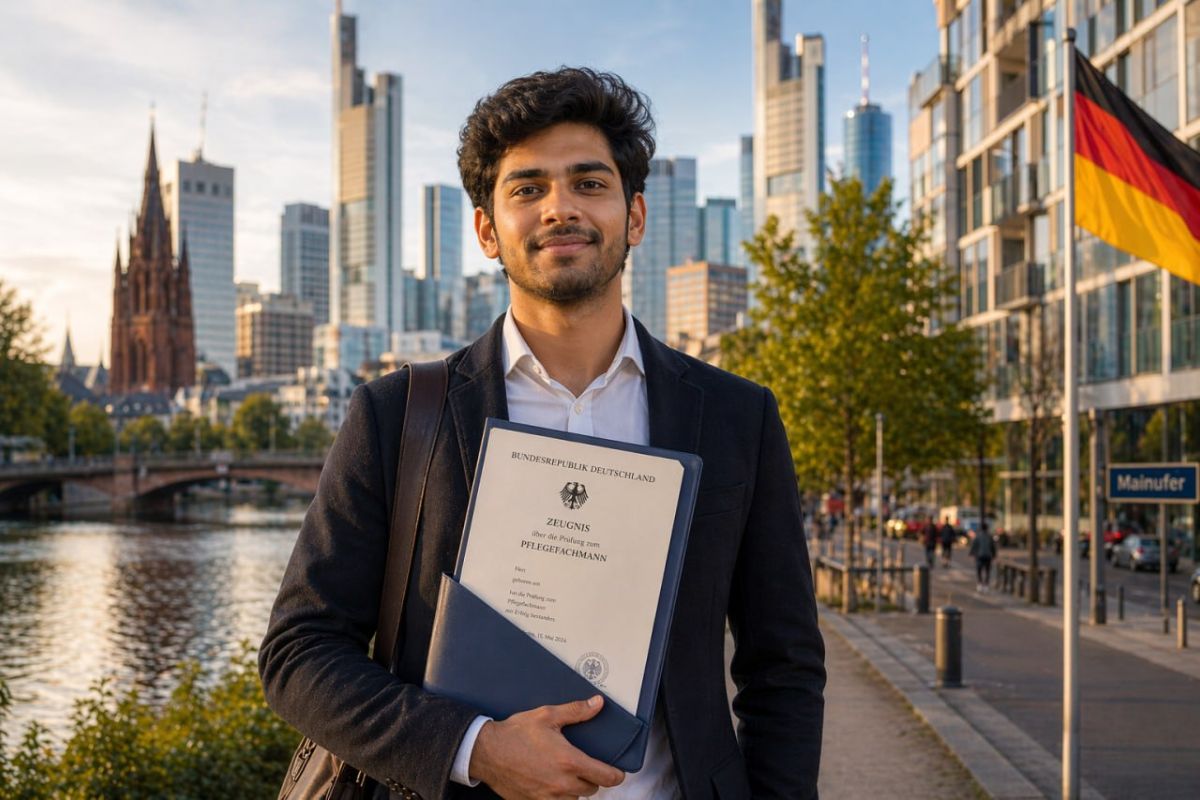
💡 In this blog: What actually happens after you complete your three-year Ausbildung in Germany – your career options, salary trajectory, further qualification pathways, and the step-by-step route to German permanent residency and long-term settlement in Europe.
The three years of Ausbildung are the investment. The life that comes after is the return. Most of the conversation around Ausbildung focuses on eligibility, language training, and the application process – all of which matter. But the more important question for a young person making this decision is: what does the rest of my career look like if I do this?
This blog answers that question in full – the salary, the career ladder, the further qualifications you can pursue, and the clear, well-documented path from Ausbildung trainee to German permanent resident.
At the end of Year 3, you sit the Abschlussprüfung – the German state professional examination. It has a written component (at your Berufsschule) and a practical component (at your employer). Both must be passed. Pass rates for well-prepared candidates are high. On passing, you receive your Ausbildungsabschluss – your government-certified German professional qualification.
Within days or weeks of qualifying, the vast majority of German employers offer their successful Azubis a permanent employment contract. This is not guaranteed by law – but in the current German labour market, where trained care professionals are in acute shortage, retaining a newly qualified Azubi is a priority for every employer. Employers have invested three years in your training. They want you to stay.
Your salary on day one of employment as a qualified professional is typically between €2,500 and €3,200 gross per month – a jump of approximately 100–150% above your Year 3 Ausbildung stipend. Net take-home after German deductions is approximately €1,800–€2,300 depending on your tax class and state.
| Stage | Timeline | Monthly Gross Salary (Approximate) |
|---|---|---|
| Ausbildung Year 1 | Age 18–19 | €900–€1,100 |
| Ausbildung Year 2 | Age 19–20 | €1,000–€1,200 |
| Ausbildung Year 3 | Age 20–21 | €1,100–€1,300 |
| Newly qualified (Year 1 post-Ausbildung) | Age 21–22 | €3,000–€3,400 |
| Experienced qualified professional (2–4 years) | Age 23–25 | €3,400–€4,000 |
| Senior or specialist (5–8 years) | Age 26–29 | €3,800–€4,200 |
| Team leader / Wohnbereichsleitung (8–10 years) | Age 29–31 | €4200+ |
These figures are consistent with current German collective bargaining agreements (Tarifvertrag) in the care sector. Salaries are indexed to inflation and increase regularly. The ten-year trajectory above assumes you stay in a standard employment track – if you pursue further qualifications, the progression is faster.
A completed German Ausbildung is not a ceiling – it is a foundation. The German professional qualification system has multiple further development pathways that build on your Ausbildung certificate. Here are the main routes available to qualified care professionals:
For Indian nationals, the route from Ausbildung to German permanent residency is well-established, legal, and documented. Here is how it works:
| Stage | When | What Happens |
|---|---|---|
| §16d Recognition Visa | Before arrival | Issued for the duration of Ausbildung – typically 3 years |
| Post-Ausbildung work permit (Aufenthaltserlaubnis §18a) | On qualifying | Converted automatically to a long-term work permit on qualification and employment offer |
| Niederlassungserlaubnis (Permanent Residency) | After 2 years of qualified employment (with C1 German and pension contributions) | Full permanent residency – live and work in Germany indefinitely |
| Einbürgerung (German Citizenship) | After 5–8 years of permanent legal residence | Option to apply for German citizenship – passport, full EU citizenship rights |
The two-year route to permanent residency (Niederlassungserlaubnis) is available under §18c of the German Residence Act for qualified professionals in shortage occupations – which currently includes the care sector. This means that if you begin Ausbildung at 18, qualify at 21, and work for two years post-qualification, you can apply for permanent residency at 23. German citizenship eligibility follows at approximately 28–29, depending on the exact start date and residence history.
📋 Timeline summary for an Indian student starting Ausbildung at 18:
Age 18: Leave India. Ausbildung begins.
Age 21: Qualify. German professional certificate received.
Age 21–22: Full-time employment. Salary €2,500–€3,000/month.
Age 23: Apply for Niederlassungserlaubnis (permanent residency). Eligible.
Age 28–29: Apply for German citizenship (EU passport).
This is a legally defined, fully documented pathway – not a promise or an estimate.
Once you hold a long-term work permit or permanent residency in Germany, you are entitled to bring your spouse and dependent children to live with you under Germany’s family reunification rules (Familiennachzug). Your spouse, on arriving in Germany, can study and work freely. Your children can attend German schools. Over time, your entire family can build roots in Germany.
This is the long-term picture that most families thinking about this decision want to understand. Ausbildung at 18 is not just a three-year commitment. It is the opening move in a strategy that can bring your entire family to one of the most stable, high-quality living environments in the world.
You are 18. Three years feels like a long time. But here is what three years of Ausbildung actually costs you – and what it gives you. It costs you three years of lower income, distance from family, and the adjustment of building a life in a new country. It gives you a German professional qualification valid across the EU, a career that pays €3,000–€4,500 a month depending on seniority, a path to permanent residency at 23, and the option of German citizenship at 28.
The question is not whether three years is a long time. The question is: what is the alternative use of those three years, and where does it take you by age 21? For most 18-year-olds in India, the honest answer is a college degree, significant family expense, and an entry-level job market with uncertain outcomes. The comparison, laid out in full, is worth thinking about carefully – which is exactly what our JSJ counsellors are here to help you do.
📞 Book Your Free Consultation – Jet Set Jobs × Destination Germany
Call /
WhatsApp: +91
96259 66817
support@jetsetjobs.in | www.jetsetjobs.in
Ausbildung Programme Germany 2027
Eligibility: Age 18–25 | Class 12 pass | Science background preferred
Programme fee: ₹2,50,000 + GST in 3 instalments
Free German A1–B2 training included | Stipend: €1,000–€1,300/month in Germany
Book a free demo class at our Karol Bagh centre or attend online. No commitment. No fees. Just one hour that could change your career.
Karol Bagh, New Delhi – 110008