🛡️ Licensed by Ministry of External Affairs · RA:
B-3413/DEL/COM/1000+/5/11419/2026
📞 +91 96259 66817
📍 15, 2nd Floor, South Patel Nagar, Delhi-110008
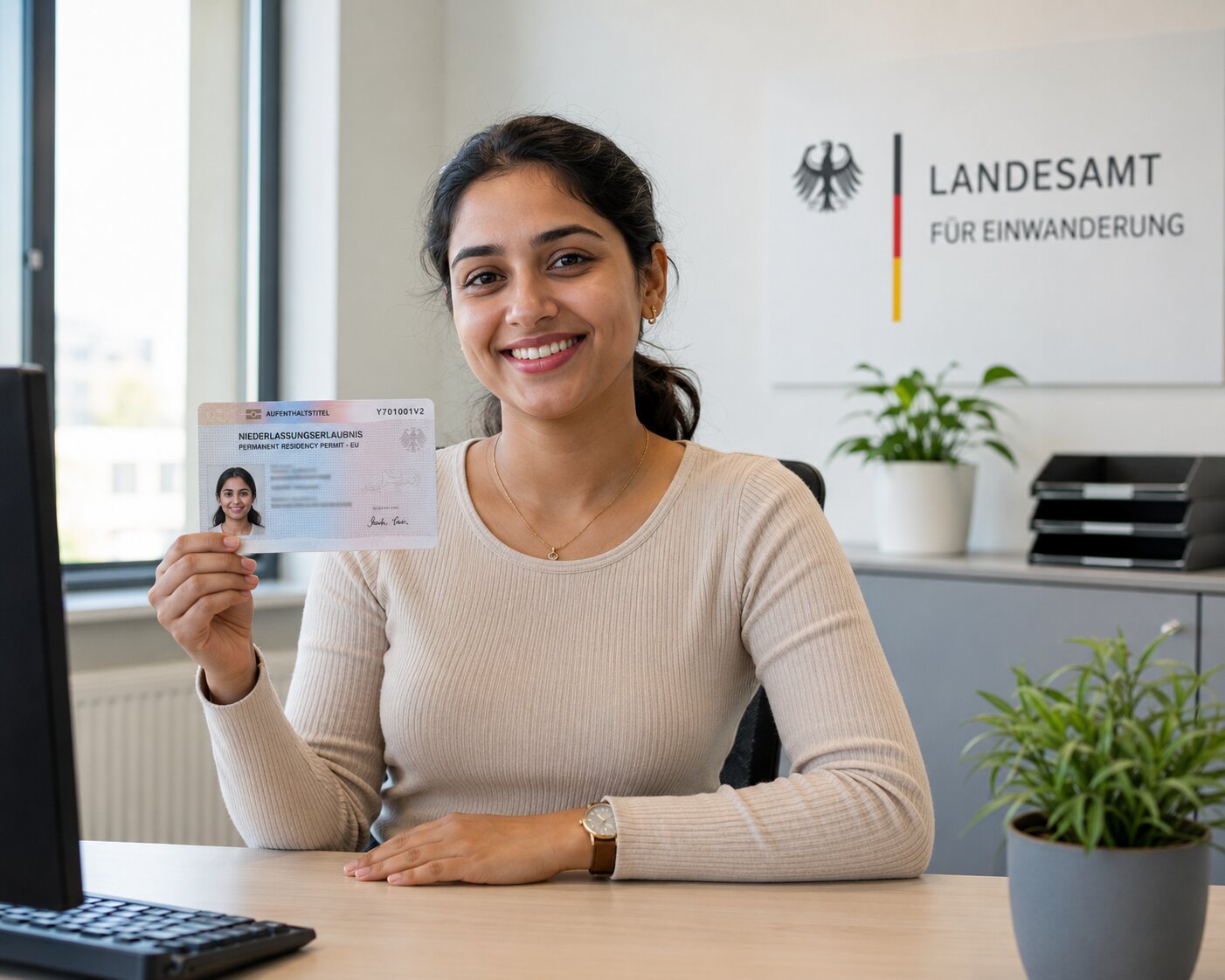
For most Indian nurses considering Germany, the question of permanent residency — the Niederlassungserlaubnis — comes up early. It should. Germany's PR pathway for skilled workers, including nurses, is one of the most clearly defined and achievable in Europe. Unlike some countries where PR involves years of uncertainty, complex points systems, or arbitrary annual caps, Germany has a straightforward framework: meet the requirements, put in the time, and the permanent residency is yours by right.
This blog lays out the complete timeline — from the day you arrive to the day you receive your Niederlassungserlaubnis — along with every requirement you need to know and how to prepare for them from your very first months in Germany.
For Indian nurses working in Germany on a skilled worker visa or recognition visa (§16d or Fachkräftevisum), the standard route to permanent residency takes four years of continuous legal residence. After those four years, you can apply for the Niederlassungserlaubnis — the unlimited settlement permit that gives you the right to live and work in Germany indefinitely, without any further visa renewals.
Four years is a realistic and achievable timeframe. To put it in perspective: if you arrive in Germany in January 2025, you become eligible to apply for PR in January 2029. That is four years during which you will have completed your nursing recognition, progressed into full post-recognition employment at €3,300–€3,500/month, built financial stability, learned German well beyond B2, and — if you have brought your family — watched your children settle into German schools and your spouse begin building their own life there.
Meeting the four-year time threshold is necessary but not sufficient. Germany requires that you meet all of the following conditions at the time of application.
You must have lived in Germany legally for at least four years with a valid residence permit throughout. Gaps in residence — periods when your permit lapsed or you spent extended time outside Germany — can interrupt the clock. In general, absences of up to six months per year are tolerated, but anything longer should be discussed with an immigration lawyer.
You must be employed at the time of application and have been consistently employed throughout your residence period. For nurses, this is typically straightforward — nursing is a stable, high-demand profession in Germany and involuntary unemployment is rare. If you change employers during your four years, ensure the transition is smooth and there is no extended gap in employment.
To qualify for the standard Niederlassungserlaubnis, you need to demonstrate German language ability at B1 level. This is actually lower than the B2 you will have already achieved before arriving in Germany. By the time you apply for PR, most nurses are comfortably at B2 or higher — four years of working and living in German will naturally push your language level well beyond the exam you sat before arrival.
Germany's PR framework requires that you have made sufficient contributions to the German statutory pension system (Deutsche Rentenversicherung). As a salaried employee in Germany, your pension contributions are automatically deducted from your salary each month — you do not need to do anything separately. After four years of employment, this requirement is automatically satisfied.
Applicants for permanent residency must demonstrate basic knowledge of the legal and social order of Germany. This is typically satisfied by completing the Integrationskurs — the integration course that combines B1 German language training with 60 hours of civic orientation. Many nurses are required to complete this course as a condition of their initial residence permit anyway.
A clean criminal record in Germany is required. Standard background checks are run as part of the PR application process. As long as you have not had any serious legal issues during your time in Germany, this is not a concern.
Germany also offers an accelerated route to permanent residency for skilled workers who demonstrate exceptional integration. Under this pathway, eligible applicants can receive the Niederlassungserlaubnis after just two years of residence if they meet additional criteria: German language at B2 or higher, special contributions to civic or professional life, or particularly high earnings.
For nurses, the B2 language criterion is typically already met on arrival. Whether the two-year pathway is available depends on your specific circumstances and the discretion of the immigration authority (Ausländerbehörde) in your city. It is worth discussing with a local immigration adviser after your first year in Germany.
| Year | Key Milestone | PR Progress |
|---|---|---|
| Year 1 | Arrive, complete Anpassungslehrgang, achieve full nursing recognition | Residence permit issued. PR clock starts. |
| Year 2 | Post-recognition salary begins (€3,300–€3,500/month). Family may arrive. | 2 years done. Eligible for accelerated PR if criteria met. |
| Year 3 | Career stability. Consider specialist training or ward leadership roles. | 3 years done. PR application prep begins. |
| Year 4 | All requirements met. PR application submitted. | Niederlassungserlaubnis issued. Permanent residency granted. |
| Year 8 | Optional: Apply for German citizenship (naturalisation). | Citizenship pathway opens after 8 years of legal residence. |
The Niederlassungserlaubnis is not just a visa renewal that lasts longer. It is a fundamentally different status. With permanent residency, you no longer need to renew your residence permit. You can work in any profession in Germany — not just nursing. You can live anywhere in Germany without restriction. You can travel freely in and out of Germany without affecting your status. And you are entitled to the same social benefits as German citizens, including unemployment insurance, statutory pension, and healthcare.
Permanent residency is also the status that gives your family long-term stability. Your spouse and children, who will have arrived on dependent permits, can also apply for permanent residency once they meet their own time and language requirements. The family's German future becomes legally secure.
Beyond PR, German citizenship (Einbürgerung) is available after eight years of legal residence — reduced to seven if you complete an advanced integration course and to six in cases of special civic contribution. German citizenship gives you a German passport, full EU citizenship rights, and the ability to vote in German elections. India does not permit dual citizenship, which means applying for German citizenship requires renouncing Indian citizenship — a significant and personal decision that every nurse must make for themselves. There is no pressure or timeline for this step; many long-term Indian residents in Germany hold permanent residency without ever applying for citizenship.
The best thing you can do for your PR journey is to keep your records clean and consistent from the moment you arrive. Keep copies of every residence permit, every employment contract, every payslip, and every official letter from German authorities. File your tax returns every year — it demonstrates stable financial behaviour and often results in a refund. Complete your Integrationskurs if required. And maintain your German language — not just for the ward, but for the immigration conversation you will have four years from now.
Permanent residency in Germany is not a remote aspiration — it is a scheduled outcome for nurses who arrive prepared, work consistently, and follow the clear pathway that German law provides. Four years from now, the nurse who starts their Germany journey today will be eligible for a status that most people in the world can never obtain: the legal right to live and work in Germany for the rest of their life, on their own terms.
That journey starts with one decision. And it starts with one phone call.
📞 Book Your Free Consultation
Call / WhatsApp: +91 96259 66817
Email: support@jetsetjobs.in | www.jetsetjobs.in
583+ candidates have started their Germany journey with us.
Refundable ₹75,000 deposit. Zero placement fees. MEA licensed.