🛡️ Licensed by Ministry of External Affairs · RA:
B-3413/DEL/COM/1000+/5/11419/2026
📞 +91 96259 66817
📍 15, 2nd Floor, South Patel Nagar, Delhi-110008
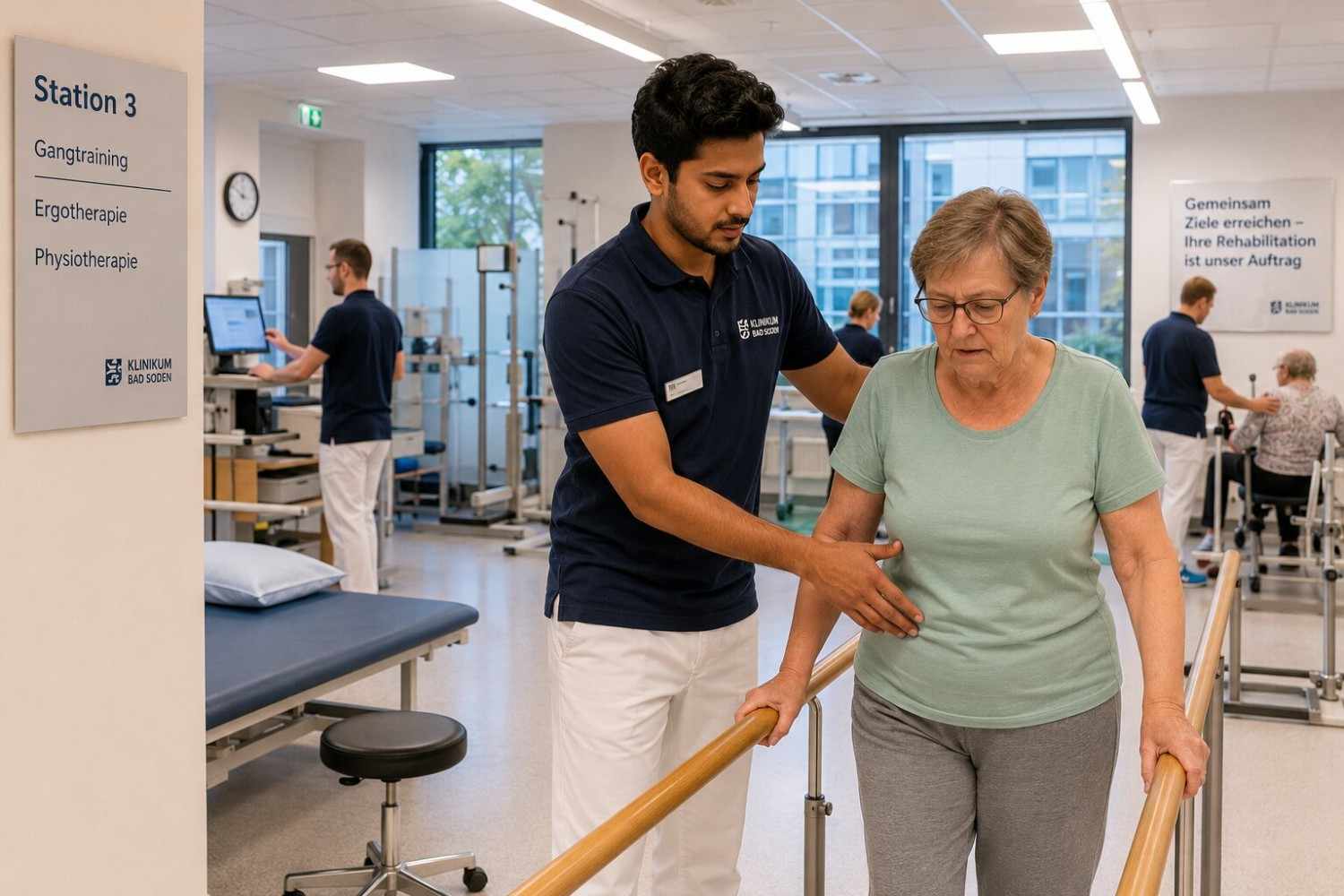
One of the most common misunderstandings about working in Germany as an Indian physiotherapist is this: many candidates assume they need to get their qualification recognised before they can apply for a visa or before an employer will consider them. This is not how the German system works.
Germany's recognition pathway for foreign healthcare professionals is specifically designed so that recognition happens in Germany — while you are already employed and earning. The visa that enables this is the Section 16d Recognition Visa. This guide explains the entire process from beginning to end, so you know exactly what you are walking into at every stage.
Berufsanerkennung means professional recognition — it is the formal process by which Germany's state authorities assess whether your Indian physiotherapy qualification is equivalent to the German Physiotherapeut standard. Until recognition is granted, you hold a provisional professional licence (Berufserlaubnis) that allows you to work under supervision. After recognition, you receive full professional authorisation to practise independently.
This distinction matters because your employment and salary begin before recognition is complete. You are not waiting in India during a lengthy administrative process. You are in Germany, working, earning, and completing the formalities in parallel.
In Germany, healthcare regulation is a state (Bundesland) matter — not a federal one. The recognition authority for physiotherapists varies depending on which German state your employer is based in. Each state has a designated health authority (Landesbehörde) or licensing body that handles allied health professional recognition.
| Stage | What Happens | Where | Typical Timeline |
|---|---|---|---|
| Pre-Arrival | Language training A1 to B2. Pre-screening at A2/B1. Conditional Offer Letter. Employer introduction at B2. COL issued. Documents apostilled and translated. | India | 10–14 months |
| Visa Application | Section 16d Recognition Visa applied for at German consulate. Requires: B2 certificate, COL, apostilled and translated documents. | India (Consulate) | 2–4 months |
| Arrival in Germany | Arrive in Germany. Begin employment immediately. Employer submits recognition application to state authority or guides submission. | Germany | First 2–4 weeks |
| Berufserlaubnis Issued | State authority issues provisional Berufserlaubnis — permission to practise under supervision while recognition is assessed. | Germany | Within first 1–3 months |
| Adaptation Period | Work under supervision of a qualified German physiotherapist. Build clinical language skills. Prepare for FSP. | Germany (Employer) | 6–18 months |
| FSP — Fachsprachprüfung | Professional Language Examination — tests healthcare-specific German. Taken at the state medical chamber or health authority. | Germany | During adaptation period |
| Assessment of Qualification | State authority compares Indian BPT with German standard. May request additional proof of clinical hours or a Kenntnisprüfung. | Germany | During adaptation period |
| Full Recognition Granted | Berufsanerkennung issued — full professional recognition. You can now practise as a fully recognised Physiotherapeut in Germany. | Germany | 6–18 months post-arrival |
The Fachsprachprüfung (FSP) is a healthcare-specific language examination that tests your ability to communicate professionally in a German clinical setting. It is distinct from your B2 German certificate. Where your B2 certificate demonstrates general language proficiency, the FSP tests practical communication in situations you will actually encounter at work: taking a patient history, explaining a treatment plan, documenting clinical notes, and communicating with physicians.
The FSP is taken in Germany during your adaptation period. The examination involves a role-play scenario with an examiner acting as a patient, followed by a documentation and communication assessment. Candidates who have genuinely reached B2 level and have been practising clinical German — as they will have done through JSJ's language programme — are well prepared for this examination.
In some cases, the state authority reviewing your Indian qualification may determine that there are gaps between the Indian BPT curriculum and the German Physiotherapeut standard. When this happens, the authority has two options: ask you to complete an adaptation period targeting those areas, or ask you to take a Kenntnisprüfung — a knowledge examination covering the areas of difference.
The Kenntnisprüfung is not a universal requirement. Most Indian BPT graduates go through the adaptation period route. However, understanding that this examination exists — and that it can be prepared for — removes the fear around it. JSJ's counsellors discuss this possibility transparently with every candidate so there are no surprises after arrival.
| Phase | Duration (Approximate) |
|---|---|
| Language training A1 to B2 (in India) | 10–12 months |
| Pre-screening, employer introduction, COL (in India) | 1–3 months |
| Document apostille and translation (in India) | 1–2 months |
| Visa processing at German consulate | 2–4 months |
| Adaptation period and FSP in Germany | 6–18 months |
| Total — Enrolment to Full Recognition | Approximately 20–30 months |
These are realistic ranges, not best-case scenarios. Candidates who begin with strong academic aptitude for language and complete training without breaks tend to reach the faster end of this range.
| Document | Requirement |
|---|---|
| Degree Certificate (BPT or Diploma) | Original + notarised copy + apostille + certified German translation |
| Academic Transcripts / Mark Sheets | All semesters + apostille + certified German translation |
| Internship / Clinical Training Certificate | Proof of practical training hours + apostille + translation |
| Professional Registration Certificate | IAP or state council registration — must be current and active |
| Experience Certificate | From employer(s) confirming clinical work duration and role |
| Passport | Valid for duration of visa + stay |
| B2 Language Certificate | TELC or Goethe B2 — required for visa application |
| Contract of Labour (COL) | From German employer — required for Section 16d visa |
| Passport-size Photographs | As per consulate requirements |
In a small number of cases, the state authority may identify specific gaps in the Indian qualification — for example, insufficient documented clinical hours in a particular area, or curriculum differences in a specialist domain. When this happens, the authority specifies what is needed: either additional supervised practice during the adaptation period targeting that area, or the Kenntnisprüfung examination covering the gap.
These situations are manageable and are handled within the adaptation period. They are not rejections of your qualification — they are targeted assessments of specific differences. JSJ works with candidates through this stage and the employer provides the supervision context needed to address any identified gaps.
📞 Book Your Free Counselling Session
Call / WhatsApp: +91 96259 66817 | +91 98100 08070
Email: support@jetsetjobs.in | www.jetsetjobs.in
500+ healthcare professionals are on their way to Germany & Austria with us.
Settle Abroad with Jet Set Jobs