🛡️ Licensed by Ministry of External Affairs · RA:
B-3413/DEL/COM/1000+/5/11419/2026
📞 +91 96259 66817
📍 15, 2nd Floor, South Patel Nagar, Delhi-110008
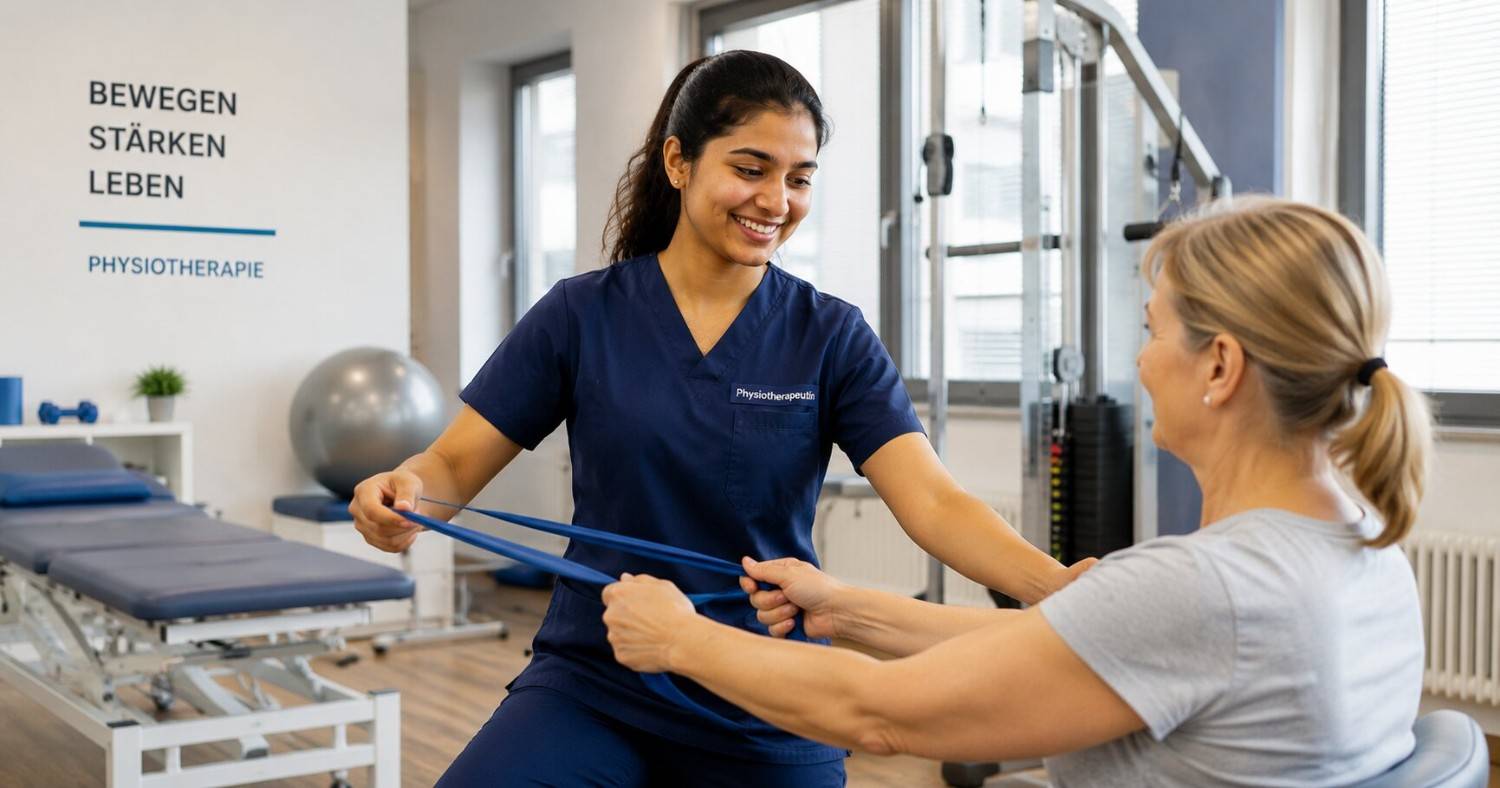
You have seen how physiotherapist pay in Germany changes by state and by city. There is a third dimension that can matter even more: the type of place you work in. A physiotherapist in a large public hospital, one in a rehabilitation clinic, and one in a small private practice down the road can all earn very different salaries - even in the same city, with the same experience.
This blog compares indicative 2026 physiotherapist pay across the main facility types in Germany - hospitals, rehabilitation clinics, private outpatient practices, and self-employment - and explains the single factor that drives most of the difference: whether the employer pays on a collective tariff. Every figure is indicative and gross; your real offer depends on the employer, your experience and your qualifications.
Before the numbers, one concept ties everything together. Tarifbindung means an employer is bound by a collective wage agreement - most importantly the TVöD (the public-sector tariff) and similar church-sector agreements used by providers such as Caritas and Diakonie. Tariff-bound employers pay on fixed scales with defined entry levels and automatic step increases for years of service. Employers that are not tariff-bound - typically small private practices - set their own pay and have more room to go lower (or, occasionally, higher). As a rule of thumb, tariff-bound facilities pay more reliably and rise more predictably.
The table shows indicative gross monthly ranges by facility type for 2026. These are orientation figures from public salary data and collective-agreement scales, not fixed quotes.
| Facility type | Indicative gross / month | Pay character |
|---|---|---|
| Public hospital (TVöD-bound) | ~€3,200 – €3,900 | Fixed scale, automatic step rises |
| Rehabilitation clinic (tariff-bound) | ~€3,200 – €3,900+ | Similar to hospitals; strong for specialists |
| Private outpatient practice (Praxis) | ~€2,750 – €3,500+ | Variable; well-run urban clinics pay more |
| Leadership / department head | ~€3,800 – €4,500+ | Management responsibility |
| Self-employed practice (§124 SGB V) | Highly variable; €4,000+ possible | Depends on caseload; higher risk |
Large public hospitals and rehabilitation clinics are usually the safest bet for a strong, predictable salary. Because they pay on collective scales, a new physiotherapist starts on a defined level and moves up automatically with years of service - no annual negotiation required. Rehabilitation clinics in particular reward specialisation: certificates in Bobath, PNF or manual therapy open doors to neurological and orthopaedic rehab roles, often within the tariff. Many larger facilities also add benefits that do not show up in the headline salary - extra training leave, funded further education, subsidised staff housing for new arrivals, and company pension contributions - which can matter a great deal when you are settling into a new country.
Private outpatient practices (ambulante Praxen) are the largest employer of physiotherapists in Germany and where many therapists spend their careers. The trade-off is real: pay is more variable and often starts lower - the bottom quartile nationally sits around €2,750 - because practices carry commercial pressure and are not bound by tariffs. But that is not the whole story. Modern, well-run practices in cities frequently pay €3,500 or more, sometimes with performance bonuses or revenue-share models, and the 2026 GKV rate increase has given them extra room to raise pay and hold onto good staff. Practices also tend to offer more hands-on autonomy, varied caseloads and a friendlier, smaller-team feel - which many therapists value highly.
Physiotherapists with a statutory-insurance licence (Kassenzulassung under §124 SGB V) can open their own practice. Income here is genuinely open-ended - a well-utilised practice can comfortably exceed the top employed salaries - but it comes with business risk, administrative work and earnings that rise and fall with your caseload. It is a path for later in your career, once you know the German system well, rather than a starting point.
For most candidates on our pathway, the first German role sits inside a clinic or rehabilitation centre - often as part of the adaptation phase - which is good news: these tariff-bound settings offer structure, predictable pay and clear progression while you find your feet. That maps neatly onto the indicative bands for your journey: roughly €2,800–€3,200 gross per month during recognition and adaptation, rising to roughly €3,200–€3,800 once fully recognised, with tariff step-rises and specialisation pushing you upward from there. Private-practice roles and, much later, self-employment become options as your experience and confidence grow. These are indicative figures, not guarantees, and our counsellors help you choose the setting that fits your goals - not just the biggest number.
📞 Book Your Free Counselling Session
Call / WhatsApp: +91 96259 66817 | +91 98100 08070
Email: support@jetsetjobs.in | www.jetsetjobs.in
500+ healthcare professionals are on their way to Germany & Austria with us.
Settle Abroad with Jet Set Jobs