🛡️ Licensed by Ministry of External Affairs · RA:
B-3413/DEL/COM/1000+/5/11419/2026
📞 +91 96259 66817
📍 15, 2nd Floor, South Patel Nagar, Delhi-110008
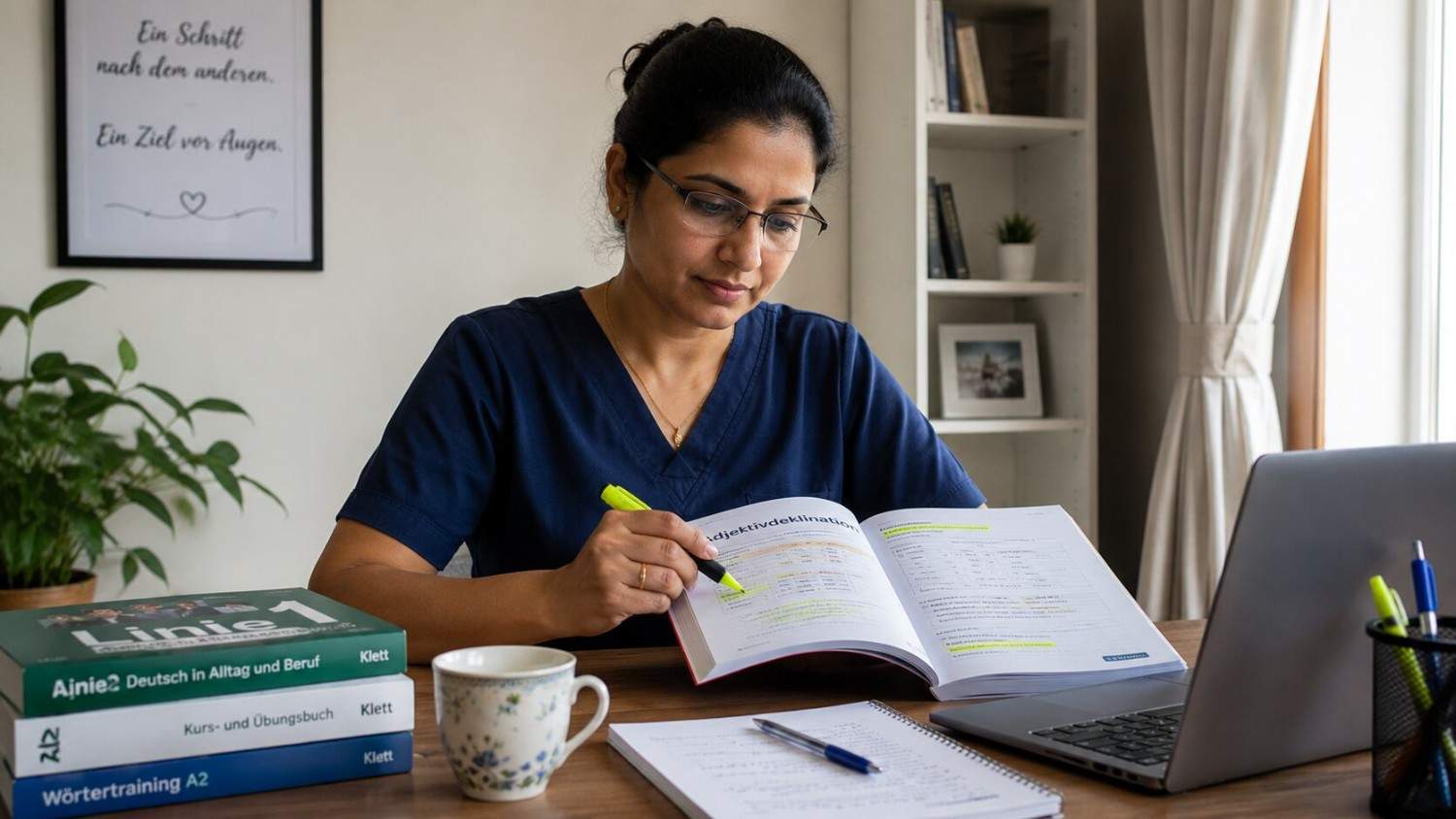
For nurse recognition and the skilled-worker route, Germany sets no official upper age limit. In fact, German law prohibits age discrimination in employment, so a hospital cannot reject a qualified nurse purely for being older. Nurses in their 40s - and even 50s - relocate to Germany and build good careers every year. Germany has a serious nursing shortage; it needs experienced hands, not just young ones.
Two reasons, and it helps to know both. First, they may be confusing your route with the Ausbildung (training) programme, where the training-visa does carry an age preference around 35 - but that is a completely different pathway from qualified-nurse recognition, and it does not apply to you as an already-qualified nurse. Second, some simply prefer younger candidates and use "age limit" as an easy way to say no. Do not let a myth end your plan.
Here is the reality laid next to the myths:
| What you may have been told | The honest reality |
|---|---|
| "There's a maximum age of 35 or 40." | No official maximum age exists for nurse recognition or the skilled-worker visa. |
| "You're too old to learn German." | Adults in their 40s reach B2 every year with consistent study. |
| "Hospitals only want young nurses." | Experience in ICU, geriatrics and leadership is actively valued. |
| "Over 45? Forget it." | Still possible - but one extra visa condition applies (see below). |
This is the honest exception, and you should know it clearly. If you are over 45 and coming to work in Germany for the first time, the law asks for one of two things: either the job pays a higher gross salary (around €55,770 per year in 2026, a figure that is updated yearly), or you show adequate pension provision. A starting nurse's base salary can sit below that threshold, so nurses in this bracket often use the pension route - and this is exactly the kind of case where you should get personalised advice rather than a generic yes or no. It is a condition to plan for, not a closed door.
Yes - honestly, yes. It is not magic and it is not effortless: adults learn a new language through consistent daily practice, not talent, and if you have been away from studying for years, the first weeks feel the hardest. But this is done all the time. Life experience actually helps with motivation, and reaching a solid B2 also strengthens your visa case, because it shows commitment and the ability to integrate. The nurses who succeed are simply the ones who show up to practice every day.
Do not underestimate what you bring. Experienced nurses tend to handle pressure and communicate with patients better, and years on the ward often mean specialisations Germany is desperate for - intensive care, oncology, geriatric care. Maturity is also valued for mentoring and leadership roles. For many hospitals, a calm 45-year-old nurse with twenty years of experience is more attractive, not less.
📞 Book Your Free Consultation
Call / WhatsApp: +91 96259 66817
Email: support@jetsetjobs.in | www.jetsetjobs.in
500+ nurses are on their way to Germany & Austria with us. Free B2 training. Zero recruitment fees.