🛡️ Licensed by Ministry of External Affairs · RA:
B-3413/DEL/COM/1000+/5/11419/2026
📞 +91 96259 66817
📍 15, 2nd Floor, South Patel Nagar, Delhi-110008
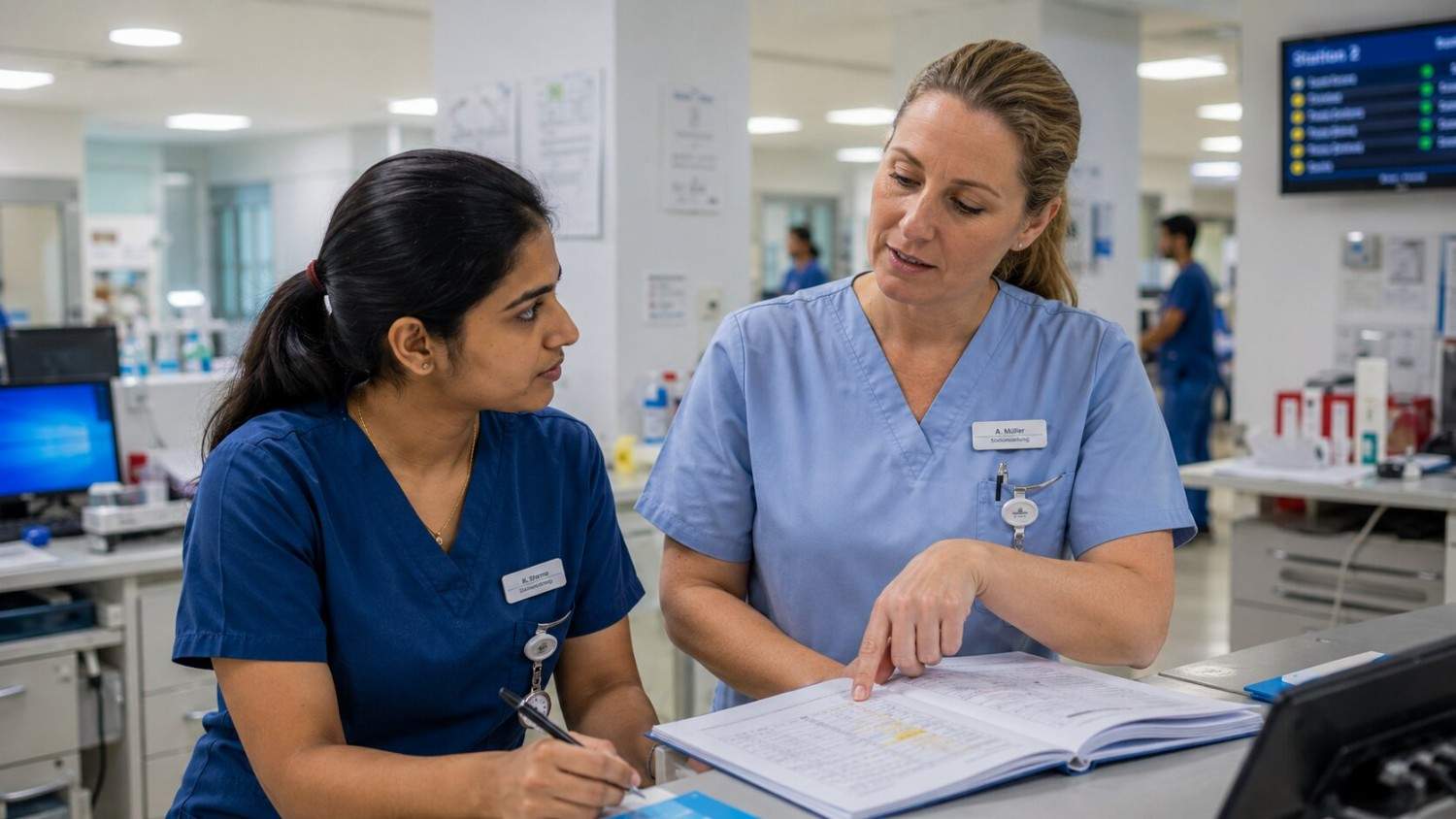
New ward, new language, new documentation system, new medications with new names - the chance of small errors in your first months is simply high, and your colleagues know it. The honest question is not "will I make a mistake?" but "what do I do when I make one?" How you handle mistakes matters far more than the fact that they happen.
This may reassure you. German hospitals run formal, usually anonymous incident-reporting systems - often called CIRS (Critical Incident Reporting System) - designed to capture errors and near-misses so the hospital can learn from them, not punish individuals. Quality and risk management is a legal requirement in German hospitals. The stated philosophy is "learn from mistakes rather than blame people," which is often more structured and less personal than many Indian nurses expect.
We will not oversell it, though. Research and many nurses' experience show that the ideal is not always the lived reality: fear of consequences and a degree of blame culture still linger in some teams, and reporting is not always as comfortable as the policy suggests. So do not expect a perfectly gentle, consequence-free environment - but equally, do not expect the harsh, shaming punishment you might fear. The truth sits in between, and it is steadily improving.
This is the mindset shift that protects you most. In Germany, asking "Können Sie mir helfen?" or double-checking a dose is seen as responsible and professional - exactly what a careful nurse should do - not as a sign that you are incompetent. Staying silent to avoid looking unsure is the genuine danger. Nobody expects a newly arrived nurse to know every local protocol; they expect you to ask when you are not certain.
The hardest part is that reporting a mistake or asking for help in German, under pressure, feels daunting - so many nurses stay quiet when they should speak. Beat this by practising a few key phrases until they are automatic: "Ich bin mir nicht sicher" (I am not sure), "Können Sie das bitte überprüfen?" (can you please check this?), and "Ich habe einen Fehler gemacht" (I made a mistake). Say them even imperfectly - a clumsy sentence that keeps a patient safe is worth infinitely more than a silent, correct one.
📞 Book Your Free Consultation
Call / WhatsApp: +91 96259 66817
Email: support@jetsetjobs.in | www.jetsetjobs.in
500+ nurses are on their way to Germany & Austria with us. Free B2 training. Zero recruitment fees.