🛡️ Licensed by Ministry of External Affairs · RA:
B-3413/DEL/COM/1000+/5/11419/2026
📞 +91 96259 66817
📍 15, 2nd Floor, South Patel Nagar, Delhi-110008
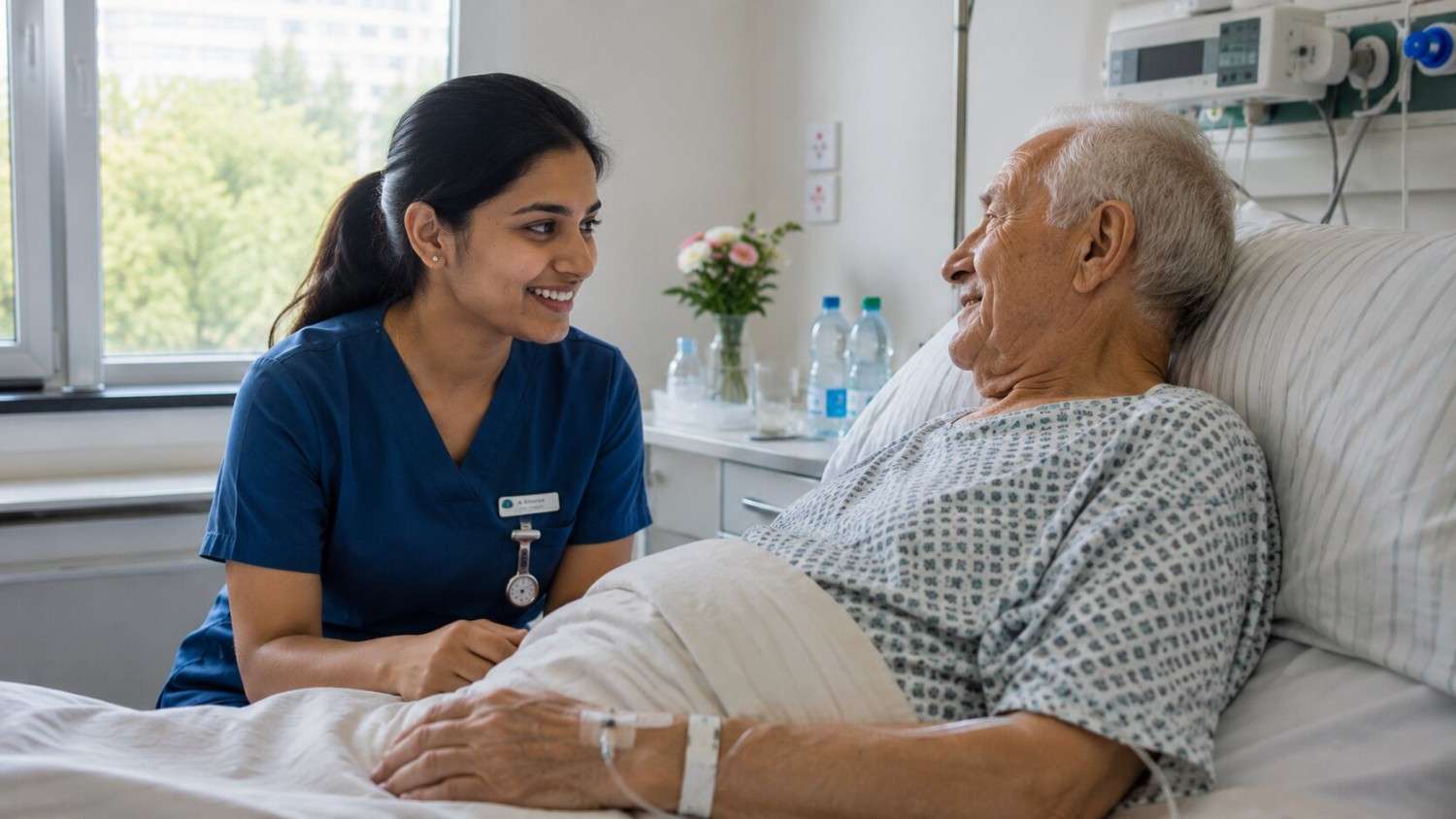
In class, German is clean, standard and slow. On the ward, patients mumble, use dialect, are in pain, are elderly, and wander off topic. The gap between the two can feel scary in your first weeks. But it closes with exposure, not with more grammar - every shift, your ear tunes in a little more. Do not judge your German by how a frightened, elderly patient sounds on day three; judge it by how much more you understand by week eight.
Address your patients with the formal "Sie", and use "Herr" or "Frau" with their surname - especially with older patients. In German culture this is a marker of respect and dignity, and getting it right matters. Only use the informal "du" with children, or if a patient specifically invites it. Slipping into "du" with an elderly patient can feel disrespectful, even if you meant to be warm.
You learn Hochdeutsch (standard German), but many patients, particularly older ones, speak in strong regional dialects:
| Region | Dialect you may hear | Note |
|---|---|---|
| The South (Bavaria) | Bavarian (Bairisch) | Can sound very different from Hochdeutsch |
| The Southwest | Swabian / Alemannic | Strong local flavour |
| The East (Saxony) | Saxon (Sächsisch) | Distinct vowels and rhythm |
| The North | Plattdeutsch (Low German) | Older patients especially |
It is completely normal not to understand at first. Politely ask the patient to repeat - "Können Sie das bitte wiederholen?" - and within a few weeks on your ward, your ear adjusts to the local sound. Dialect is a shock, not a wall.
This is an important cultural difference. German patients - again, especially older ones - expect to be informed about their care and involved in decisions. They value autonomy and dignity highly, and many have a living will (Patientenverfügung). Do not do things "to" a patient without explaining first. A simple "Ich möchte jetzt Ihren Blutdruck messen" (I would like to take your blood pressure now) before you act shows respect and builds trust far faster than silent efficiency.
Nursing is a relationship, not just a task list. A few warm words - "Wie geht es Ihnen heute?", a comment on the weather, a question about family photos by the bed - mean a great deal, especially to lonely elderly patients. You do not need perfect grammar to be kind. Warmth crosses the language gap before fluency does, and patients remember the nurse who took a moment, not the one with flawless cases and datives.
Let us be honest about this too: occasionally a patient may be reserved, or even rude, because you are foreign or your German is still imperfect. It stings. But it usually fades once they see your competence and your kindness. Try not to take it personally, keep your care warm and professional, and let your work speak. Many nurses find their coldest patient on day one becomes their fondest by discharge.
📞 Book Your Free Consultation
Call / WhatsApp: +91 96259 66817
Email: support@jetsetjobs.in | www.jetsetjobs.in
500+ nurses are on their way to Germany & Austria with us. Free B2 training. Zero recruitment fees.