🛡️ Licensed by Ministry of External Affairs · RA:
B-3413/DEL/COM/1000+/5/11419/2026
📞 +91 96259 66817
📍 15, 2nd Floor, South Patel Nagar, Delhi-110008
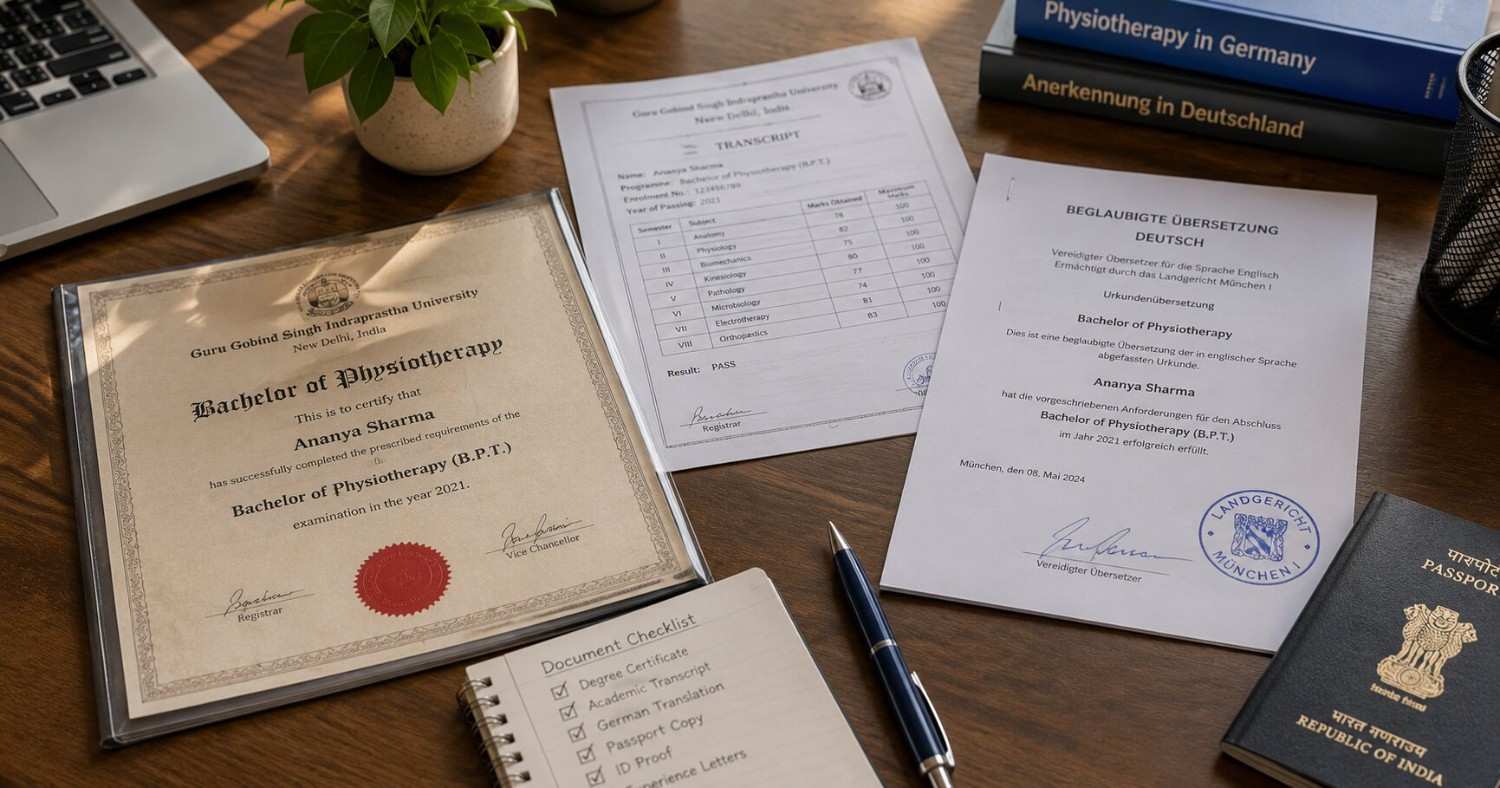
As your German job search gets real, so does the paperwork. One document requirement trips up more applicants than almost any other: translations. In Germany, not just any translation will do. Submit the wrong kind and the authority hands it straight back - costing you weeks and another fee. This blog, part of our practical toolkit, explains exactly what a 'sworn translation' is, which of your documents need one, and how to get it right the first time.
We'll cover the crucial difference between a sworn and an ordinary translation, where to find a proper translator, what it costs in 2026, and the sequencing mistake that forces people to pay twice. This is practical guidance; always confirm the exact requirements with the authority handling your case.
In Germany, an official translation must be a beglaubigte Übersetzung - a certified, or 'sworn,' translation. You'll see several German terms for it (beeidigte, vereidigte, ermächtigte Übersetzung); confusingly, they all mean the same thing - the wording just varies by federal state. What they share is the key point: the translation was made by a translator who has taken an oath before a German court (a Landgericht) and is officially appointed. Such a translator stamps and signs the translation, certifying it is complete and accurate, and that stamp gives it legal weight across all of Germany.
For a physiotherapist heading to Germany, sworn German translations are typically needed for the documents behind your recognition and visa. These usually include:
The recognition authority decides exactly which translations it needs, so always check its list first. A useful fact: your degree and transcript translations are a one-time investment - once done correctly, you keep and reuse them.
The safest route is a translator officially sworn by a German court. Germany runs a free, official database - justiz-dolmetscher.de - listing over 24,000 court-appointed translators and interpreters; you can search by language pair (English–German) and confirm a translator's oath status. The professional association BDÜ is another reliable source. Many sworn translators work remotely from high-quality scans and post you the stamped original, and some specialise in Indian documents and know exactly what German authorities expect. Before you pay, check the translator actually appears in the official register.
Can you get it done in India instead? Sometimes - but German authorities do not always accept translations made by a translator appointed abroad, and acceptance varies. The reliable choice is a Germany-based court-sworn translator; if you want to translate in India, confirm acceptance with the specific authority first.
| Aspect | Detail |
|---|---|
| What's accepted | Sworn translation by a German court-appointed translator only |
| What's rejected | Ordinary, notarised, India-certified, or self / AI translations |
| Where to find one | justiz-dolmetscher.de (official database) or BDÜ |
| Typical cost | ~€40–€80 per page (minimum orders and rush surcharges apply) |
| Key documents | Degree, transcripts, experience certificates, PCC, civil documents |
| Golden rule | Apostille the original before translating |
Here is the single most important sequencing rule: if a document needs an apostille or legalisation, that must be done on the original before it goes to the translator. The translator then translates the whole document, including the apostille and every stamp and seal. Get the order wrong - translate first, apostille later - and you'll have to pay for the translation all over again. Two more pitfalls to avoid: make sure the spelling of your name matches your passport exactly across every document (mismatched transliterations cause rejections), and ensure nothing is left out - authorities expect every word, stamp and seal translated, front and back.
For candidates on our pathway, sworn translations are one of the practical building blocks of recognition and the visa - and getting them right early keeps your whole timeline on track. Because JSJ supports the documentation and recognition side of your journey, our team helps you understand which documents need translating, in what order, and how they fit with apostille and recognition steps. The translation fees themselves are charged by the translators (a government-regulated, external cost), entirely separate from your JSJ programme. As always, confirm the precise requirements with the authority handling your case.
📞 Book Your Free Counselling Session
Call / WhatsApp: +91 96259 66817 | +91 98100 08070
Email: support@jetsetjobs.in | www.jetsetjobs.in
500+ healthcare professionals are on their way to Germany & Austria with us.
Settle Abroad with Jet Set Jobs