🛡️ Licensed by Ministry of External Affairs · RA:
B-3413/DEL/COM/1000+/5/11419/2026
📞 +91 96259 66817
📍 15, 2nd Floor, South Patel Nagar, Delhi-110008
Germany has two health-insurance systems: public - gesetzliche Krankenversicherung (GKV), which covers the large majority of people, and private - private Krankenversicherung (PKV), used mainly by high earners, civil servants and the self-employed. Which one you are in is not really a free choice for most people; it is decided by your job and income.
Here is the key point for you: employees earning below a set threshold (€77,400 per year in 2026) must be publicly insured. A nurse's salary is comfortably below that, so you are automatically in GKV - and that is a good place to be. It is a solidarity system: your contribution is based on your income, not your health, and you can never be refused or priced out because of a medical condition.
Public contributions are a percentage of your gross salary, and - importantly - your employer pays half:
| Contribution | Approx. rate (2026) | Who pays |
|---|---|---|
| Base health insurance | 14.6% of gross | Split 50/50 with your employer |
| Supplementary (Zusatzbeitrag) | ~2.9% average (varies by fund) | Also split 50/50 |
| Long-term care (Pflege) | ~3.6% (+0.6% if childless) | Split; childless surcharge is yours alone |
Contributions are only charged up to an income ceiling (around €5,812 per month in 2026), and you never pay upfront at the doctor - the fund is billed directly. You will see these deductions on your payslip, which is why your "gross" and "net" salary differ.
Within the public system you choose your Krankenkasse (health fund) - names you will hear include TK, AOK, Barmer and DAK. By law, roughly 95% of their benefits are identical, so they mainly differ on the small supplementary rate and on service quality - some offer better English-language support and bonus programmes. You can switch funds later if you want, so this is not a stressful decision.
This is one of the best features of the public system. Through Familienversicherung (family insurance), your spouse and children can be covered free of charge if they have little or no income, under one contribution - yours. In private insurance, by contrast, every family member pays a separate premium. For a nurse planning to bring family to Germany, this is a genuinely valuable advantage.
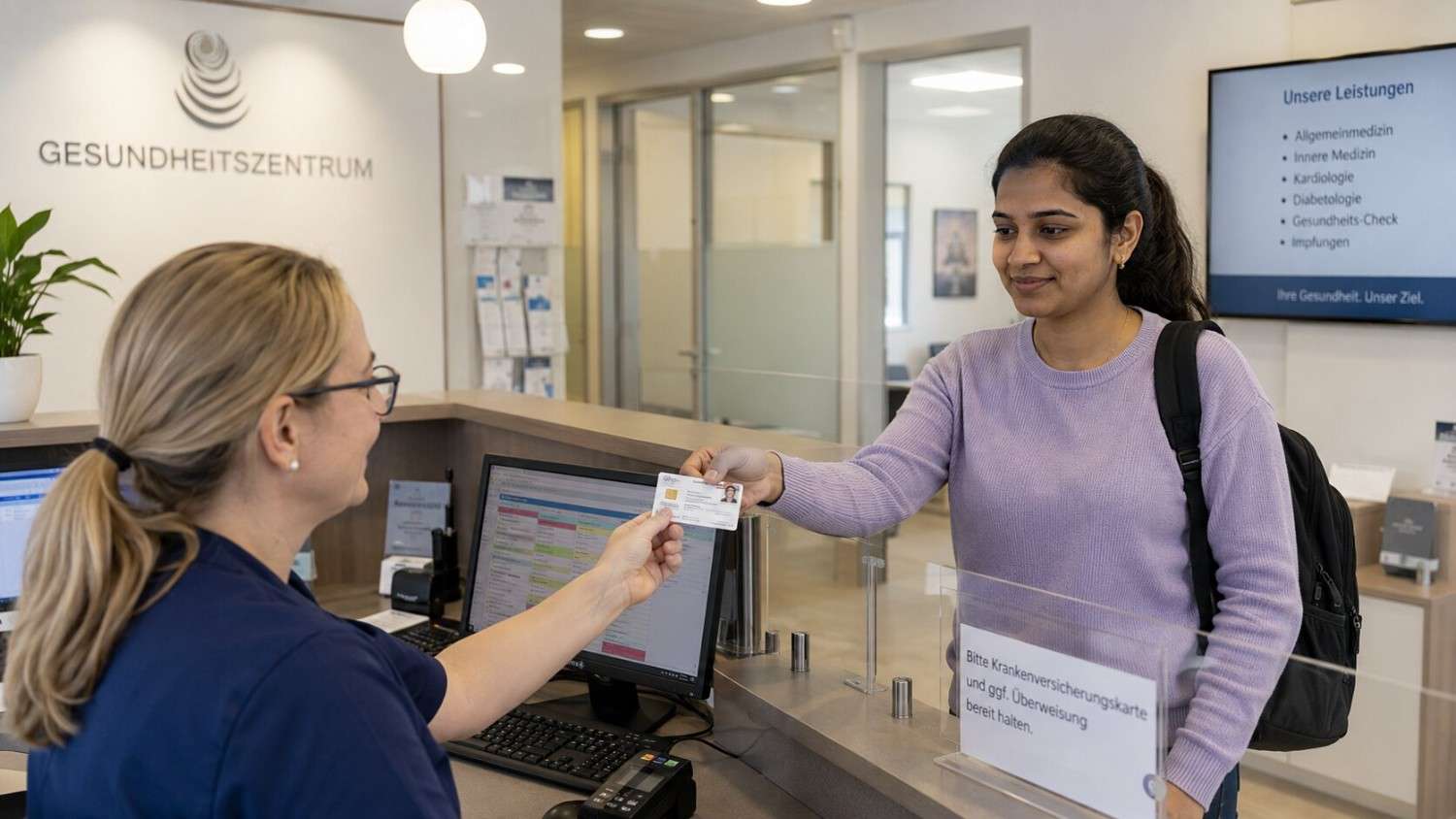
Public insurance covers doctor and specialist visits, hospital treatment, maternity, mental health, preventive care and prescriptions (with small, legally-set co-payments). You receive an electronic health card (Gesundheitskarte) to show at any doctor or pharmacy. The main trade-off versus private is that specialist appointments can take longer to get - but the core medical care is comprehensive and secure.
You will hear about private insurance (PKV), but as an employed nurse it is not your path. It is risk-based (priced on age and health), charges a separate premium per person (no free family cover), can look cheap when you are young but rises with age, and is very hard to leave later. Also, do not be talked into buying cheap "travel" or "incoming" insurance for your visa - German authorities usually require proper substitutive cover, which your public insurance provides.
📞 Book Your Free Consultation
Call / WhatsApp: +91 96259 66817
Email: support@jetsetjobs.in | www.jetsetjobs.in
500+ nurses are on their way to Germany & Austria with us. Free B2 training. Zero recruitment fees.