🛡️ Licensed by Ministry of External Affairs · RA:
B-3413/DEL/COM/1000+/5/11419/2026
📞 +91 96259 66817
📍 15, 2nd Floor, South Patel Nagar, Delhi-110008
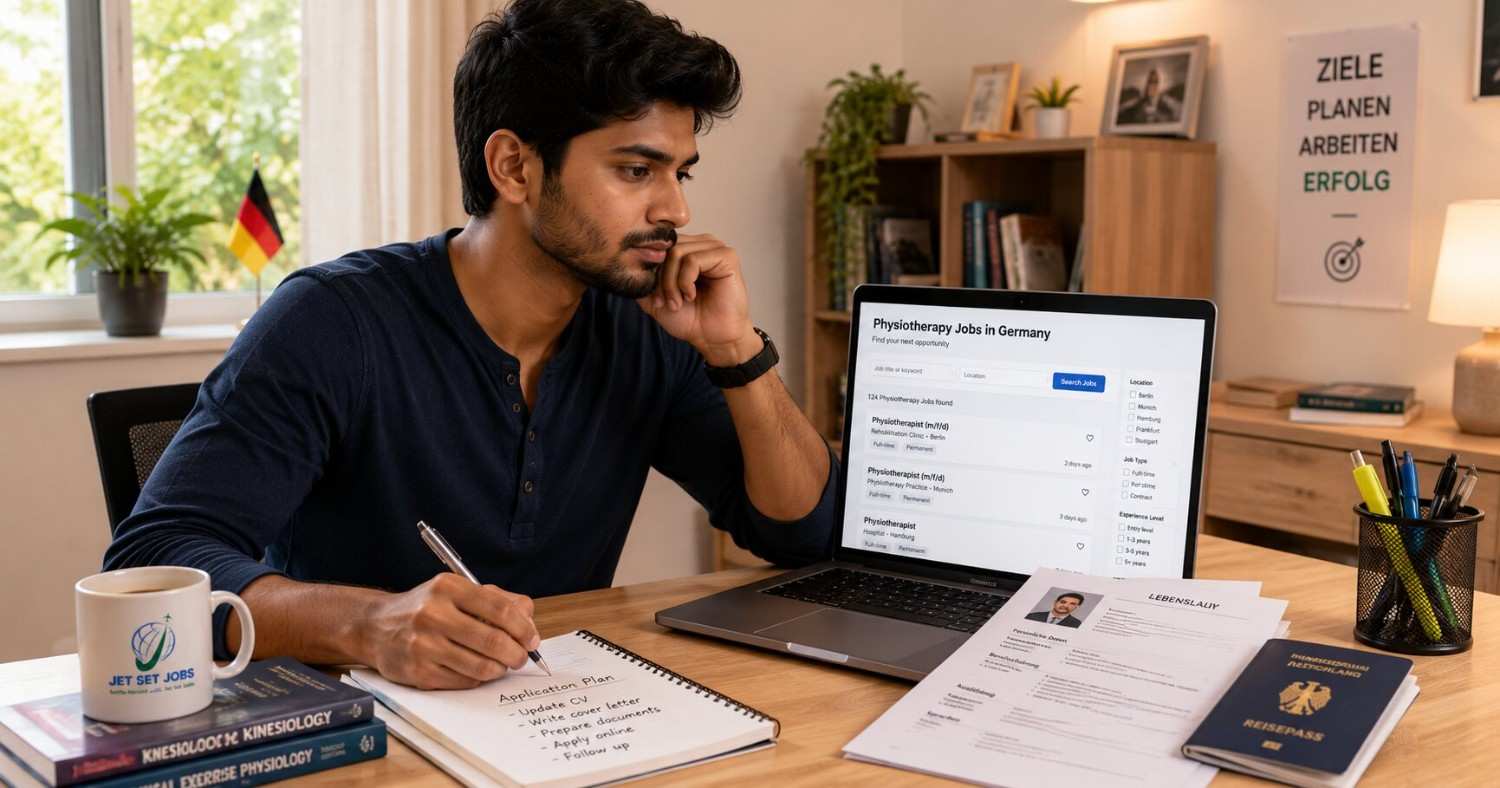
This blog opens our final cluster - comparisons and niche topics - with a question many candidates ask us directly: Germany or Austria? Because Jet Set Jobs supports physiotherapists heading to both, we're well placed to lay out an honest, side-by-side comparison. The two countries are more similar than different - both German-speaking, both short of physiotherapists, both offering a high quality of life - but the details differ in ways that can genuinely shape your decision.
Here we compare the two on the things that matter most: recognition, immigration, salary, settlement and lifestyle. Figures are indicative, and immigration rules change, so treat this as a current-picture guide and confirm specifics before you decide.
Both countries regulate physiotherapy, so in each you must have your qualification recognised and be registered before you can practise. The key difference is what they compare you against. Germany's physiotherapy qualification has traditionally been vocational (though it's now academising), which tends to make it flexible in assessing a range of foreign qualifications, including diplomas. Austria, by contrast, has long treated physiotherapy as a Bachelor's-degree profession delivered by universities of applied sciences - so it expects a degree-level qualification with clear credit values. In practice, that means a BPT (a Bachelor's degree) fits both countries well, while a diploma-only qualification may face a smoother path in Germany. Austria's recognition process typically takes around four months, with adaptation or an aptitude test if gaps are found.
This is where Germany's system shows its breadth. Germany offers several well-established routes - the EU Blue Card, the Chancenkarte (Opportunity Card), and the §16d recognition visa - giving qualified physiotherapists multiple ways in. Austria uses a single flagship route, the points-based Red-White-Red Card, and here's the good news: physiotherapy is on Austria's 2026 shortage-occupation list, so you can qualify through that track with a job offer, needing 55 of 90 points and a salary meeting the collective-agreement rate (the 2026 key-worker minimum is €3,465 gross a month). Austria's card is less well known than Germany's options, which can mean less competition, though Germany's greater variety of routes offers more flexibility.
Headline monthly pay for physiotherapists is broadly comparable between the two countries, but Austria has a distinctive twist. Austrian salaries are typically paid in fourteen instalments a year, not twelve: employees receive a 13th and a 14th monthly payment (often around mid-year and at Christmas), and - crucially - these two extra payments are taxed at a very low rate of around 6%. That structure meaningfully boosts real annual income. Germany's indicative physiotherapist pay runs roughly €2,800–€3,800 gross per month depending on stage and region, with its own annual bonus (a partial 13th-month) and strong benefits. Both are financially attractive; Austria's 14-month model is simply a different, and often generous, way of packaging it.
For your long-term future, there are real differences. Germany offers a notably fast route to permanent residency - as little as 21 months on a Blue Card with B1 German - and, since its 2024 reform, allows dual citizenship, with naturalisation possible after five years. Austria's permanent residency also comes after five years, but citizenship takes longer (commonly six to ten years) and Austria generally does not permit dual citizenship. On lifestyle, both countries score highly, but Austria has a special claim: Vienna has topped global liveability rankings for years running. Germany offers greater scale - a far larger job market and a bigger Indian and international community.
| Factor | Germany | Austria |
|---|---|---|
| Language | German B2 | German B2 |
| Recognition fit | Flexible (diploma or degree) | Degree-level (Bachelor) expected |
| Main visa routes | Blue Card, Chancenkarte, §16d | Red-White-Red Card (points) |
| Indicative pay | ~€2,800–3,800/mo (12 + bonus) | Competitive, paid over 14 months |
| Permanent residency | From ~21 months (Blue Card) | ~5 years |
| Citizenship | ~5 years; dual allowed | ~6–10 years; dual generally not |
Because Jet Set Jobs supports physiotherapists relocating to both Germany and Austria, you don't have to make this choice alone or in the dark. We can talk you through how your specific qualification fits each country, what the immigration route looks like, and how the salary and settlement picture compares for your situation. There's no single 'better' country - only the one that best fits your qualification, your priorities and your life plans. Our role is to help you weigh that clearly, on a supported pathway, and then back your decision.
📞 Book Your Free Counselling Session
Call / WhatsApp: +91 96259 66817 | +91 98100 08070
Email: support@jetsetjobs.in | www.jetsetjobs.in
500+ healthcare professionals are on their way to Germany & Austria with us.
Settle Abroad with Jet Set Jobs