🛡️ Licensed by Ministry of External Affairs · RA:
B-3413/DEL/COM/1000+/5/11419/2026
📞 +91 96259 66817
📍 15, 2nd Floor, South Patel Nagar, Delhi-110008
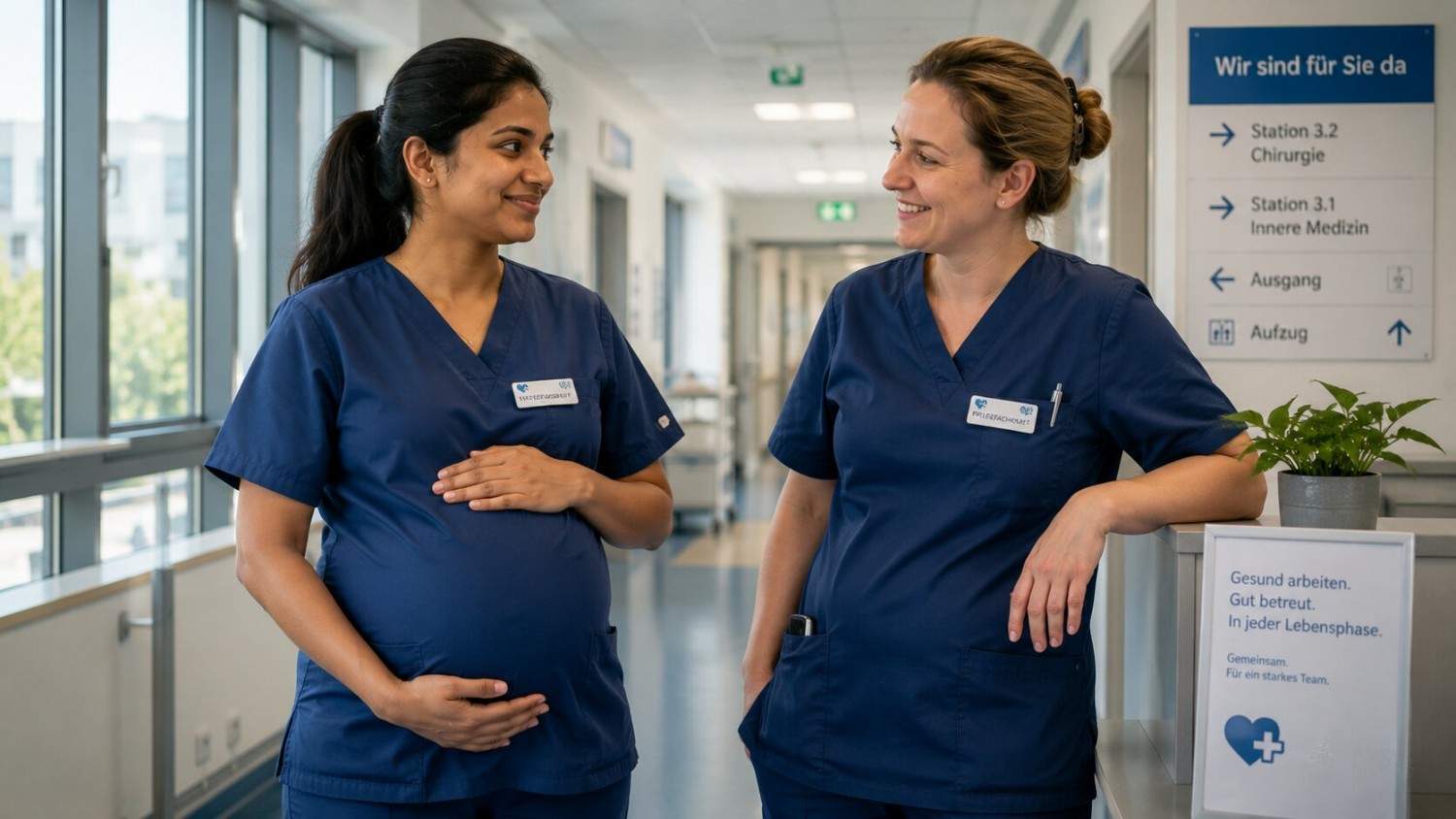
Let us clear up the fear straight away. The Maternity Protection Act (Mutterschutzgesetz, MuSchG) applies to every woman employed in Germany - regardless of nationality, marital status, contract type, or how long you have worked there. Full-time, part-time, fixed-term: covered. Your residence permit remains valid. There is no minimum service period, and you do not have to apply for it - the protection is automatic.
From the moment you inform your employer of your pregnancy, they take on legal duties. They must carry out a risk assessment (Gefährdungsbeurteilung) for your specific role and adjust your work accordingly. If your work cannot be made safe, they must move you to a suitable alternative role - and if that is not possible, place you on paid protective leave. This is not the employer being generous; it is the law.
This is where it gets very real for a nurse, because shift work is the heart of the job. Once you are pregnant, you may not:
| Restriction | What it means for you |
|---|---|
| No night work (20:00–06:00) | Your night shifts stop |
| No Sunday or public holiday work | Your weekend roster changes |
| No overtime | No extra hours, however short-staffed the ward is |
| Max 8.5 hours per day / 90 hours per two weeks | Your shift lengths are capped |
| No hazardous exposure or heavy physical work | Protection from infection risk, chemicals, radiation, heavy lifting |
And crucially - your pay does not drop because of these restrictions. You are not being penalised for being protected.
Because nursing carries real risks (infection, lifting, chemicals), a doctor may issue a Beschäftigungsverbot - an employment ban - meaning you stop working earlier than the standard protection period. This is not sick leave and it is not a black mark against you: your employer continues paying your normal average income. Healthcare is one of the fields where this happens most often, precisely because the work cannot always be made safe.
The core entitlement is 14 weeks of protected leave: 6 weeks before the due date (you may work if you choose to, but nobody can pressure you) and 8 weeks after the birth, when work is absolutely prohibited. That extends to 12 weeks for premature births, multiple births, or a caesarean. During this time you receive Mutterschaftsgeld from your health insurer (up to €13 per calendar day), and your employer tops it up to your average net earnings - so in practice you receive roughly your normal take-home pay.
From the start of your pregnancy until four months after the birth, you are protected from dismissal. Exceptions are extremely rare and need approval from the state authority. If you are dismissed anyway, act quickly - there is generally a three-week window to challenge it - and seek legal advice.
Tell your health insurer (Krankenkasse) about seven weeks before your due date and submit the medical certificate confirming the date, or your Mutterschaftsgeld can be delayed. And gather your Elterngeld documents during pregnancy - payslips, Tax ID, the Mutterschaftsgeld certificate - because you can only apply after the birth, and it is only backdated a limited number of months.
📞 Book Your Free Consultation
Call / WhatsApp: +91 96259 66817
Email: support@jetsetjobs.in | www.jetsetjobs.in
500+ nurses are on their way to Germany & Austria with us. Free B2 training. Zero recruitment fees.