🛡️ Licensed by Ministry of External Affairs · RA:
B-3413/DEL/COM/1000+/5/11419/2026
📞 +91 96259 66817
📍 15, 2nd Floor, South Patel Nagar, Delhi-110008
📌 WHAT YOU'LL LEARN
Your realistic housing options as a trainee and what they actually cost, the German rental vocabulary that confuses everyone (Kaltmiete, Warmmiete, Kaution), and how to spot rental scams before they cost you money - plus the one thing to check before signing.
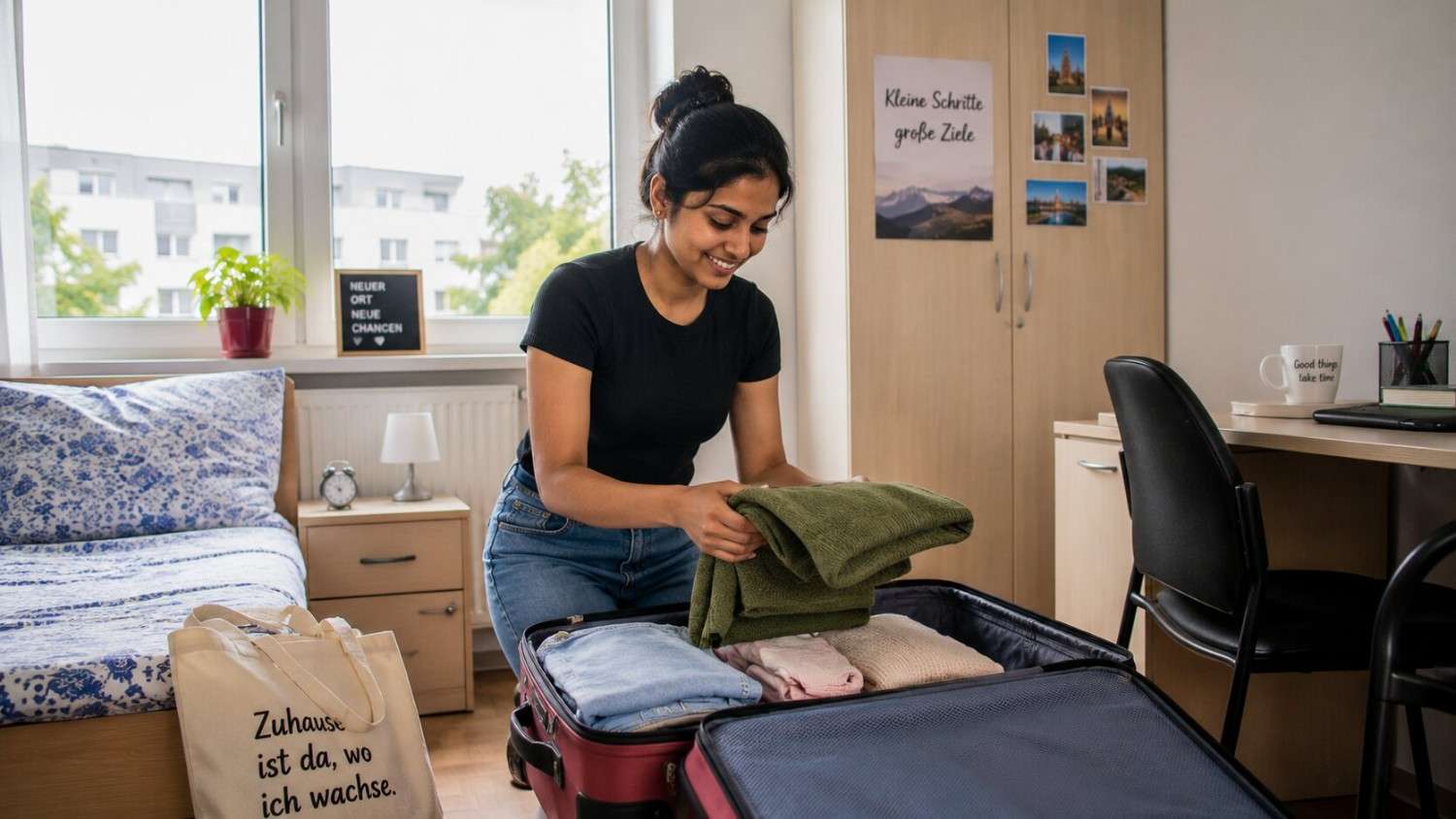
Once the offer is real, the next worry arrives fast: “Where am I actually going to live?” It's a fair thing to be anxious about - Germany's housing market is genuinely tight, and the big cities are competitive. But trainees find homes every year, and the process is manageable once you understand how it works. Here's the honest guide.
You're not looking for a family apartment. As a trainee, three options do most of the work:
| Option | What it means |
|---|---|
| WG (Wohngemeinschaft) | A shared flat - your own bedroom, shared kitchen and bathroom. The most popular and affordable choice, and it comes with built-in company. |
| Trainee/company housing | Some employers offer accommodation or a housing subsidy. Always ask - this is the easiest option by far when it exists. |
| Small private flat | Your own place. More expensive, often unfurnished, and hardest to get as a newcomer. |
Budget-wise, trainee housing commonly runs around €250–€450 a month in affordable cities, more in Munich or Frankfurt. On a €1,000–€1,300 stipend, a WG in a mid-sized city is very workable - which is another reason the eastern and mid-sized cities are worth staying open to.
German listings use terms that trip up every newcomer. Learn these four and you'll read any advert correctly:
One more surprise worth knowing: German flats are often rented unfurnished, and some don't even include a kitchen. WG rooms, thankfully, are usually furnished.
The Kaution is a security deposit, and German law protects you here: it is legally capped at three months' Kaltmiete - no more. It isn't a fee; you get it back when you move out, minus any genuine damage. Plan for it though: between the deposit and first month's rent, you'll want a cushion of roughly €1,500–€2,500 available at move-in.
This matters, because newcomers are targeted deliberately. The scam is almost always the same script: the ‘landlord’ is conveniently abroad, the flat looks perfect, the price is suspiciously low, and they want the deposit transferred before any viewing. Treat these as hard red flags:
Use established platforms, insist on a viewing (or at minimum a live video tour), verify who you're dealing with, and never let urgency rush you. A genuine landlord will not vanish because you asked for a day to check.
This is easy to overlook and expensive to get wrong: confirm the address allows Anmeldung (official address registration). Some short-term and informal arrangements don't permit it - and without Anmeldung you can't get your bank account, tax ID or residence permit. Ask the question directly before you commit to anything.
⚠️ THE HONEST REALITY
Germany's housing market is tight, and this step takes effort - it's normal for it to take time, especially in popular cities. Start early, stay flexible on location, and be prepared for a few rejections. But thousands of trainees do this successfully every year, and your employer is often the best first place to ask. Never let stress push you into paying someone you haven't met.
Will my employer help me find a place?
Often, yes - and it's always worth asking. Some companies provide trainee accommodation or a housing subsidy, and many will at least point you toward local options. It's one of the first questions to raise once you have your offer.
Can I afford rent on a trainee stipend?
In most cities, yes. Trainee-suitable housing commonly runs €250–€450 a month, which is manageable on a €1,000–€1,300 stipend, especially in a WG. Munich and Frankfurt are the expensive outliers - another reason to stay open about location.
Should I arrange accommodation before I fly?
Start searching early, but be very careful about paying for anything unseen from India - that's exactly where scams happen. A safer approach is short-term accommodation on arrival (one that permits Anmeldung, if possible) while you view places properly in person.
583+ aspirants have already started their Germany journey with Jet Set Jobs and Destination Germany.
📞 Book Your Free Consultation - Jet Set Jobs × Destination Germany
Call / WhatsApp: +91 96259 66817
Email: support@jetsetjobs.in | www.jetsetjobs.in
Ausbildung Programme Germany 2027
Eligibility: Age 18–25 | Class 12 pass | Science background preferred
Programme Fee: ₹2,50,000 + GST in 3 instalments
Free German A1–B2 training included | Stipend: €1,000–€1,300/month