🛡️ Licensed by Ministry of External Affairs · RA:
B-3413/DEL/COM/1000+/5/11419/2026
📞 +91 96259 66817
📍 15, 2nd Floor, South Patel Nagar, Delhi-110008
 JET SET JOBS
Settle Abroad with Jet Set Jobs
JET SET JOBS
Settle Abroad with Jet Set Jobs
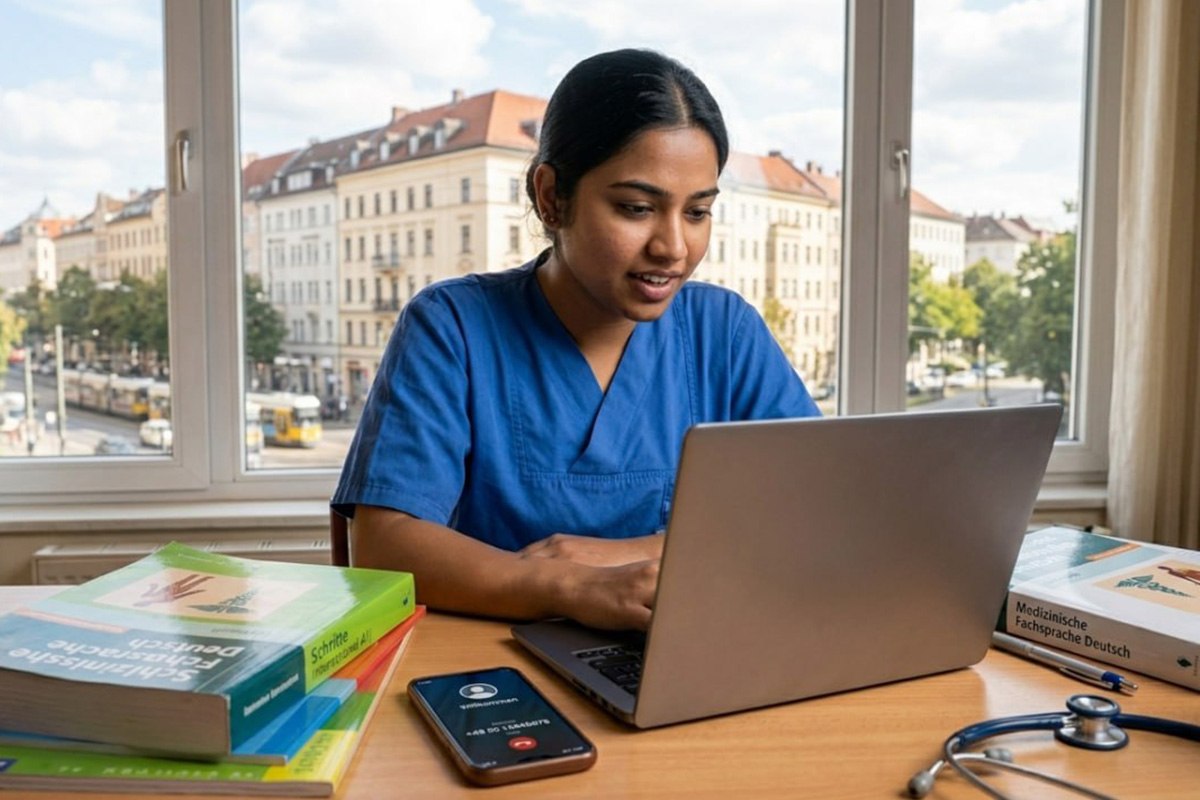
This blog breaks down real Ausbildung stipend amounts by field and training year, explains what take-home pay looks like after deductions, and shows how far that money goes against actual living costs in Germany.
When an Indian family hears that their child can go to Germany, work for a real employer, and earn between €900 and €1,300 per month from the very first day – before completing any degree, before gaining any work experience – the reaction is almost always the same: are you sure? The answer is yes. This is not a promise from an agency. It is how the German Ausbildung system has worked for decades. It is written into every training contract. The stipend is mandatory.
Understanding exactly what you will earn, and what that money can cover, is one of the most important things to work out before deciding whether Ausbildung is right for you. Here are the real numbers for 2027.
Since January 2024, Germany introduced a minimum Ausbildung remuneration set by federal law. For the first year of training, the minimum is €649 per month. This increases in subsequent years. Most employers pay significantly above this minimum – particularly in healthcare, engineering, and logistics – where competition for trainees is high. The figures below reflect real market rates in 2027, not just the legal minimum.
| Field | Year 1 Stipend | Year 2 Stipend | Year 3 Stipend |
|---|---|---|---|
| Healthcare / Nursing | €1,190 | €1,252 | €1,353 |
| IT / Software Development | €1,050 – €1,200 | €1,100 – €1,300 | €1,150 – €1,400 |
| Mechatronics / Engineering | €900 – €1,050 | €990 – €1,150 | €1,060 – €1,250 |
| Logistics / Supply Chain | €850 – €950 | €920 – €1,020 | €980 – €1,100 |
| Hospitality / Hotel Mgmt | €700 – €850 | €750 – €920 | €820 – €1,000 |
| Retail / Business Admin | €700 – €800 | €750 – €850 | €800 – €920 |
Ausbildung trainees in Germany pay social security contributions – health insurance, pension,
unemployment, and nursing care insurance – which together amount to roughly 20% of gross stipend. Income tax is
generally not applicable at these stipend levels for most trainees, or is very low. So a trainee earning €1,100
gross per month typically takes home approximately €880–€900 per month. A trainee earning €1,300 gross takes
home approximately €1,020–€1,050.
This is real, spendable money in Germany. It is not a token allowance.
Germany is not the cheapest country in Europe, but it is far more affordable than London or Paris. Ausbildung trainees typically receive subsidised accommodation or a housing allowance from their employer, particularly in the healthcare sector. Here is a realistic monthly budget for an Ausbildung trainee in a smaller German city such as Dortmund, Nuremberg, or Leipzig – cities where many training positions are located.
| Expense | Monthly Cost (approx.) | Notes |
|---|---|---|
| Accommodation | €250 – €450 | Employer-subsidised housing is common in healthcare |
| Food & groceries | €200 – €300 | German supermarkets are competitively priced |
| Transport | €0 – €80 | Many employers provide a DB public transport pass |
| Phone / internet | €20 – €30 | Prepaid SIM with data is inexpensive in Germany |
| Personal expenses | €100 – €150 | Clothing, toiletries, social activities |
| Total estimated monthly spend | €570 – €1,010 | Varies by city size and employer support |
A trainee earning €1,000 take-home in a city where accommodation is subsidised can realistically save €200–€400 per month. Over three years, that is a meaningful amount accumulated – while simultaneously receiving a qualification and building a career.
A fresh GNM graduate in India earns approximately ₹12,000–₹20,000 per month depending on location and employer. A BSc Nursing graduate in a corporate hospital may earn ₹20,000–₹30,000. An Ausbildung trainee in Year 1 in Germany earns the equivalent of ₹81,000–₹1,07,000 per month – in a country with subsidised healthcare, social insurance, and a legal framework that protects workers. The gap is substantial.
Over a full 3-year Ausbildung in healthcare, a trainee earning average stipends would receive approximately €37,000–€42,000 in total gross income. That is roughly ₹33–₹38 lakh, earned while training for a qualification and building a career path that leads to permanent residency.
Upon completing Ausbildung and passing your IHK/HWK examinations, you transition from trainee to skilled worker. In healthcare, a qualified nursing professional in Germany earns between €2,800 and €3,500 per month gross depending on specialisation and employer. In IT, starting salaries for qualified Ausbildung graduates are typically €2,500–€3,200 per month. In engineering and mechatronics, expect €2,400–€3,000. These are significant incomes by any international standard, and they continue to grow with experience.
The financial case for Ausbildung is not just about the stipend during training. It is about the income trajectory you are starting from Day 1 – and the fact that you are building toward it from a position of financial stability rather than debt.
Book a free demo class at our Karol Bagh centre or attend online. No commitment. No fees. Just one hour that could change your career.
Karol Bagh, New Delhi – 110008