🛡️ Licensed by Ministry of External Affairs · RA:
B-3413/DEL/COM/1000+/5/11419/2026
📞 +91 96259 66817
📍 15, 2nd Floor, South Patel Nagar, Delhi-110008
 JET SET JOBS
Settle Abroad with Jet Set Jobs
JET SET JOBS
Settle Abroad with Jet Set Jobs
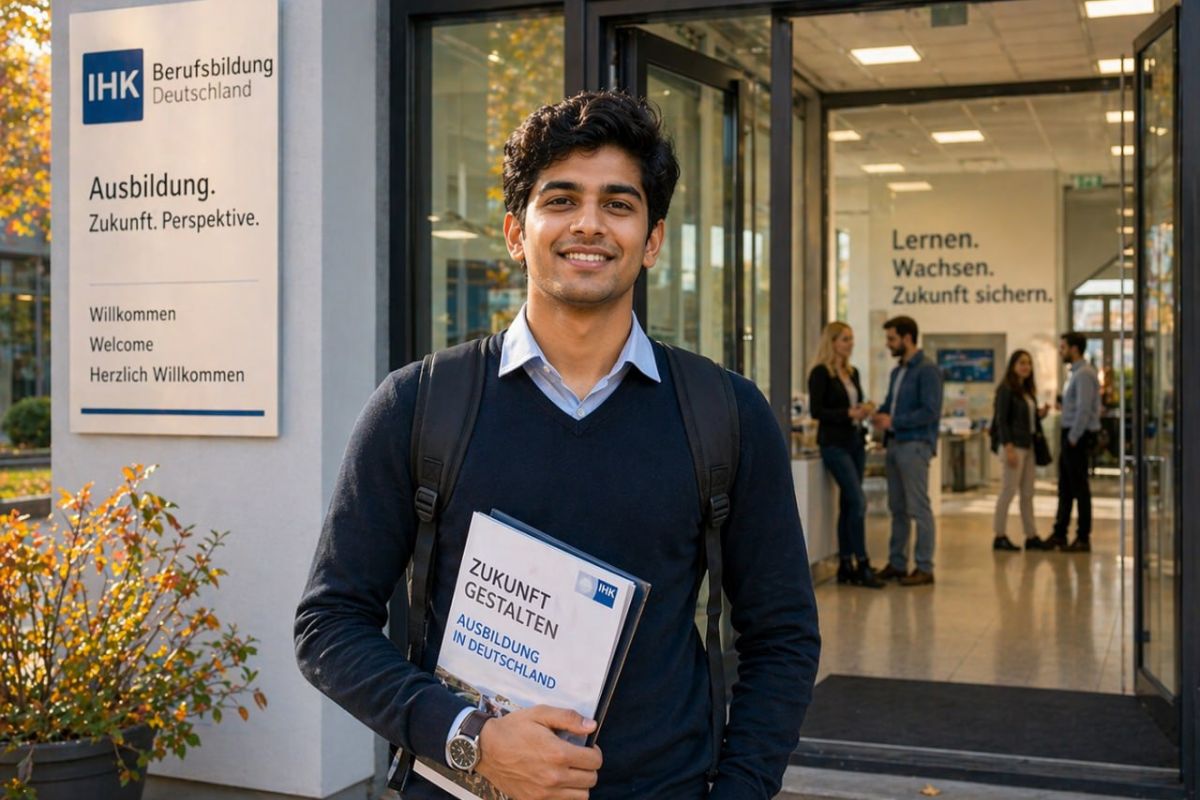
💡 In this blog: A realistic, honest picture of day-to-day life for an 18–20 year old Indian student doing Ausbildung in Germany-the weekly schedule, money, housing, German language reality, food, weekends, and what happens after three years.
When you are 18 or 19 and considering moving to Germany for three years, the practical questions matter just as much as the career ones. What does a typical day look like? Is the money actually enough to live on? Where will you live? What do you eat? What happens when you feel homesick? Is Germany safe for a young Indian student on their own?
These are the right questions to ask-and they deserve honest answers, not promotional language. This blog is based on the real experiences of students placed through the JSJ and Destination Germany programme.
The defining feature of Ausbildung is the dual system-your time is divided between your training organisation (four days per week) and the Berufsschule, Germany’s vocational school network (one day per week). This rhythm is consistent throughout all three years of your training.
| Day | Location | What You Do |
|---|---|---|
| Monday | Training organisation | Practical work under supervision of your Praxisanleiter (training mentor) |
| Tuesday | Training organisation | Continuing hands-on training, department-specific tasks, teamwork |
| Wednesday | Berufsschule | Theory classes in German-professional concepts, written communication, regulations |
| Thursday | Training organisation | Rotations through different departments or functions |
| Friday | Training organisation | Assessments, skill reviews, team briefings, end-of-week reflection |
Your working hours are regulated by German law-typically 38–40 hours per week. You cannot be asked to work unlimited overtime. You receive 24–28 days of paid annual leave per year (most trainees use this for holidays, including a trip back to India). If you are under 18 when you start, additional youth protection laws apply. You are a legally employed person in Germany from day one-not an intern, not a guest worker.
Let us be direct: the German language will be your biggest adjustment in the first months. This is true for every international Ausbildung trainee, regardless of where they come from. Your Berufsschule classes are in German. Your workplace communications-emails, reports, briefings, conversations with supervisors-are in German. In some professions, your daily interactions with the people you serve are in German.
JSJ trains you to B1 before you leave India, which means you arrive with a genuine foundation. You can understand basic instructions, ask for help, and navigate daily life. But B1 is not fluency. The first two to three months in Germany involve language fatigue-you are processing a foreign language all day, every day, and it is tiring.
The consistent experience of JSJ-placed students is this: by month three or four, German starts to feel less exhausting. By month six, you are communicating confidently in most work situations. By the end of Year 1, you are genuinely bilingual for your professional context. The investment you make in language before departure directly determines how quickly you make this transition.
| Monthly Expense | Approximate Cost in Germany |
|---|---|
| Accommodation (shared flat / employer housing) | €350–€500 (many organisations provide subsidised housing) |
| Food (home cooking primarily) | €180–€280 |
| Public transport (Deutschlandticket) | €49–€90/month |
| Phone plan and internet | €20–€40 |
| Personal care, clothing, miscellaneous | €60–€100 |
| Estimated total monthly spend | €659–€1,010 |
| Year 1 take-home stipend (netto) | Approximately €780–€870 |
| Surplus / savings margin in Year 1 | Small-Year 2 and 3 are more comfortable |
Year 1 is the financially tightest period. But it is liveable-especially if your training organisation provides accommodation support, which JSJ specifically looks for in partner organisations. By Year 2 and 3, your stipend increases and your monthly costs stabilise as you settle into German life. Many students begin sending money home from Year 2 onwards. After qualifying, your salary approximately triples.
Most German training organisations that take international Ausbildung trainees either provide direct accommodation (a room in a trainee residence or a company flat) or actively assist you in finding shared accommodation near the training site. The JSJ programme specifically works with organisations that support incoming international trainees on housing-this is part of the vetting process when we select employer partners for our candidates.
Shared flats (WGs-Wohngemeinschaft) are the standard living arrangement for young people in Germany. You rent a furnished room in a flat shared with two to four other people, typically including other Azubis-often from different countries. This is not a compromise. It is the normal, practical, social way that young professionals in Germany live, and it means you have a community around you from the first week.
Germany has a substantial South Asian and Indian community. Most medium-sized German cities have at least one Asian supermarket stocking basmati rice, dal, Indian spices, ghee, and cooking staples. In larger cities-Frankfurt, Stuttgart, Düsseldorf, Cologne, Hamburg-there are dedicated Indian grocery stores, multiple Indian restaurants, and Indian cultural and religious associations.
Cooking your own meals is easy and affordable. Several of our placed students report that cooking Indian food on weekends is one of the most grounding and enjoyable parts of their week-a familiar ritual in an unfamiliar place.
💬 From a JSJ Ausbildung candidate, currently in Year 2 in Germany:
“The first six weeks were honestly the hardest-language, missing family, and a completely new routine. But by
month three I had settled. My colleagues were patient with my German. I made friends with other international
Azubis in my building. Now I feel completely comfortable here. Germany surprised me-it is much more welcoming
than I expected.”
The Deutschlandticket-a nationwide public transport flat-rate for €49/month-gives every Azubi unrestricted access to all local and regional trains across Germany. For weekend trips within Germany, you pay almost nothing. Germany is also central to Europe: low-cost flights from Frankfurt, Munich, or Berlin will take you to Paris, Amsterdam, Vienna, Prague, or Barcelona for €30–€80 return if you book ahead.
Most Ausbildung trainees in Year 1 focus on exploring their own city and the surrounding region. By Year 2, many have visited several European countries. This geographic freedom-the ability to travel Europe cheaply and easily from a base in Germany-is one of the most consistently mentioned benefits from students in our programme.
Germany consistently ranks among the safest countries in the world for young people living independently. Public infrastructure is excellent, emergency services are highly reliable, and the rule of law is strictly upheld. Petty crime exists in major tourist areas, as in any large city, but violent crime against young foreign residents is extremely low.
German society, while sometimes reserved on first contact, is generally welcoming to international Azubis. Your training organisation’s Praxisanleiter (training mentor) is legally responsible for supporting your professional development and is your first point of contact for any concern at work. Destination Germany’s in-country team provides additional support during your first months.
At the end of your Ausbildung, you sit the Abschlussprüfung-the German state vocational examination. This is administered by the relevant state chamber (depending on your profession) and consists of a written component and a practical assessment. Candidates who have engaged seriously with their training pass at high rates.
Upon passing, you receive your Ausbildungsabschlusszeugnis-your German vocational qualification certificate. Your training organisation will almost certainly offer you a permanent employment contract. Your salary moves to the qualified professional rate: €2,500–€3,500/month gross. Your residence permit transitions to a long-term work permit. After two to five years of continued employment, you can apply for the Niederlassungserlaubnis-permanent residency in Germany and the EU.
At 21 or 22 years old, you are a qualified, employed professional in one of the world’s strongest economies, building a European future. That is the destination the three years of Ausbildung is taking you to.
Jet Set Jobs × Destination Germany-Ausbildung Germany Programme
For students aged 18–25. Class 12 pass (Science background preferred).
Programme Fee: ₹2,50,000 + GST-paid in 3 instalments.
Free German language training A1–B2 included. Stipend: €1,000–€1,300/month in Germany.
Book a free demo class at our Karol Bagh centre or attend online. No commitment. No fees. Just one hour that could change your career.
Karol Bagh, New Delhi – 110008