
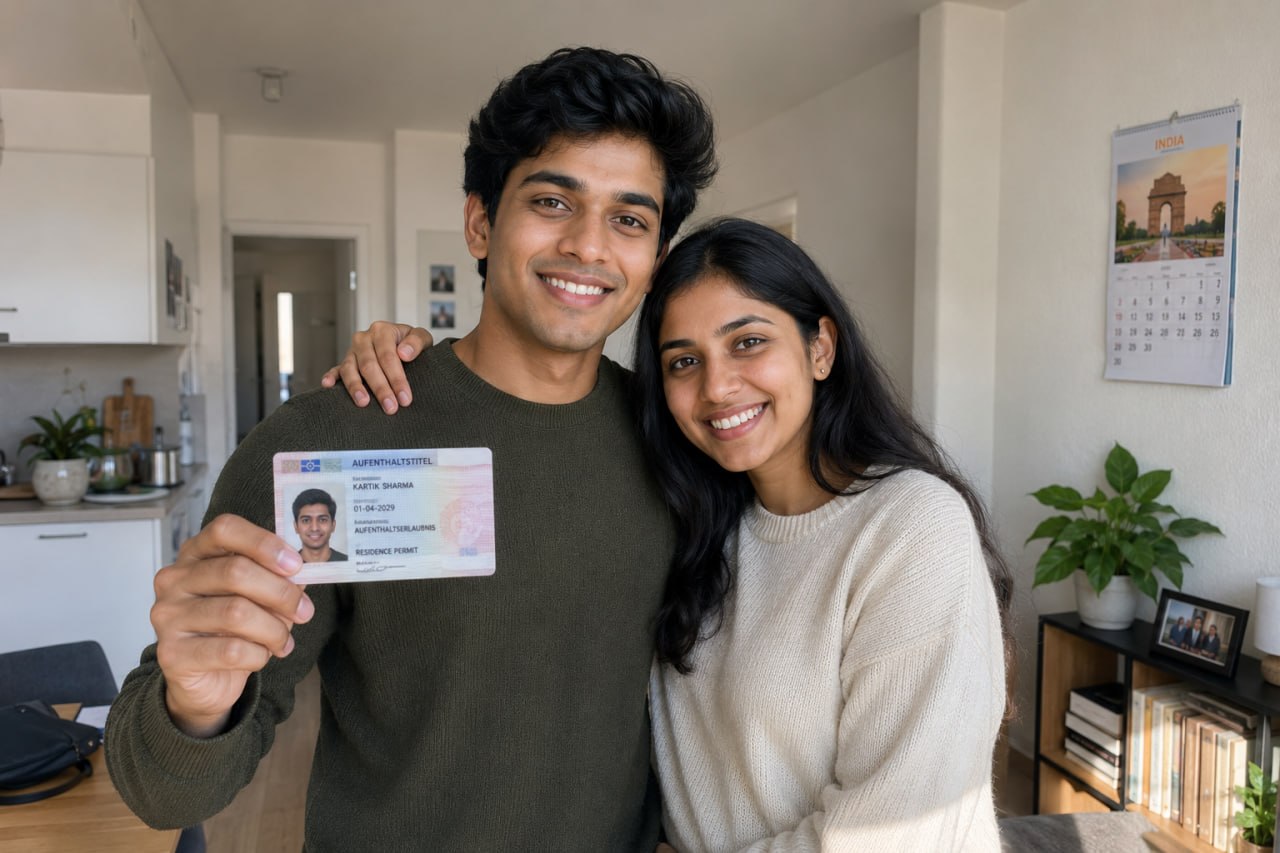
When parents sit across from us at JSJ and talk about the Ausbildung programme, one question comes up again and again — even when it is not asked directly. The question underneath every other question is this: if my child builds a life in Germany, will we still be a family?
It is the right question. And the answer is yes — in a very practical, legally documented, and achievable way. Germany's family reunification system (Familiennachzug) is one of the most important and least discussed aspects of the Ausbildung pathway. This blog explains it completely.
What Is Familiennachzug?
Familiennachzug is the German legal term for family reunification — the process by which a foreign national who is legally settled in Germany can bring their spouse and dependent children to join them. It is governed by Sections 27 to 36 of the German Residence Act (Aufenthaltsgesetz) and is a legal right, not a discretionary favour. Once you meet the qualifying conditions, Germany cannot arbitrarily refuse your family members.
When Can You Bring Your Family? The Timeline
| Stage | Your Legal Status | Family Reunification Right |
|---|---|---|
| During Ausbildung (Years 1–3) | §16d Anerkennungsvisum — training visa | No family reunification during training period |
| Just qualified — employment begins | §18a/§18b long-term work permit | Spouse can apply for Familiennachzug visa immediately |
| After 2 years post-qualification | Niederlassungserlaubnis (permanent residency) | Full family reunification rights — fastest processing |
| After citizenship (approx. 8 years) | German citizen | EU free movement — family rights even broader |
The critical turning point is the moment your Ausbildung ends and you receive your long-term work permit. That is when the Familiennachzug door opens. If you start Ausbildung at 18 and qualify at 21, your spouse can begin the family reunification application from age 21 onwards.
Who Can Come Under Familiennachzug?
- Spouse or registered life partner — the most common and most important category for Indian Ausbildung graduates. Your husband or wife can apply to join you in Germany.
- Minor children (under 18) — children can join the resident parent in Germany.
- In certain circumstances, dependent parents or other family members — but this is more restricted and requires specific conditions to be met.
What Are the Conditions for Spousal Reunification?
- You must hold a valid German residence permit of sufficient type — a long-term work permit (§18a, §18b) or Niederlassungserlaubnis (permanent residency) qualifies. The §16d training visa does not.
- You must have sufficient living space — your accommodation must be large enough for both of you under German housing standards.
- You must have sufficient income — your combined household income must cover both of your living costs without recourse to social welfare. A post-Ausbildung salary of €2,500–€3,000/month easily meets this threshold.
- Your spouse must have basic German language skills — A1 level is the standard requirement for spousal Familiennachzug from outside the EU. This is a conversational minimum, not a professional requirement.
- Both you and your spouse must be at least 18 years old at the time of application.
📋 The A1 German requirement for your spouse:
Your spouse needs to demonstrate A1 German before the visa is issued.
A1 takes approximately 2–3 months of basic classes to reach.
JSJ can guide your spouse on A1 preparation before and during your Ausbildung.
This is the only meaningful preparation requirement for family reunification.
It is entirely achievable — hundreds of Indian spouses have completed it.
What Rights Does Your Spouse Have in Germany?
A spouse who arrives in Germany on a Familiennachzug visa does not arrive as a dependent with no rights. Under German law, a spouse who joins a long-term permit holder has the following rights from the moment their visa is granted:
- Right to work: Your spouse can work in any job, in any sector, without restriction. They do not need a separate work permit.
- Right to study: Your spouse can enrol in German language courses, vocational training programmes, or university study.
- Right to residence: Your spouse's residence permit becomes independent after a period (typically three years or after the primary holder gets permanent residency).
- Path to permanent residency: After five years of legal residence in Germany, your spouse can apply for their own Niederlassungserlaubnis independently.
The Marriage Timing Question — Does It Matter?
Many Indian families ask: does our child need to be married before they go to Germany, or can they get married while they are there? The answer is flexible. You can get married before leaving India and bring your spouse over once you qualify and hold a long-term work permit. You can also get married during your Ausbildung years in India on a visit home, and then apply for Familiennachzug after qualifying. Or you can get married while in Germany — German civil registry marriage is legally straightforward for Indian nationals.
There is no requirement to be married before starting Ausbildung. What matters is that you hold the right permit type when you apply.
What Does the Full Family Timeline Look Like?
Full family timeline for a JSJ candidate starting Ausbildung at 18:
Age 18 → Arrive in Germany. Ausbildung begins. Living independently.
Age 19–20 → Visit India on annual leave (24–28 days/year). Family maintains connection.
Age 21 → Qualify. Long-term work permit issued. Familiennachzug right ACTIVE.
Age 21–22 → Spouse completes A1 German. Familiennachzug visa application submitted.
Age 22 → Spouse arrives in Germany. Both working. Building life together.
Age 23 → Permanent residency (Niederlassungserlaubnis) application filed.
Age 25 → Spouse eligible for own independent residence permit.
Age 28–29 → German citizenship application. EU passport for the whole family.
Parents and Siblings — Can They Come Too?
German law does allow for the reunification of parents and siblings in exceptional circumstances — primarily when the German resident is the only person who can care for them, or when there are no other family members remaining in the home country. These cases are assessed individually and are genuinely difficult to qualify for.
For most Indian families, the realistic expectation is that parents and siblings remain in India while the Ausbildung graduate and their spouse build their life in Germany. Annual visits, video calls, and remittances home are the norm — not estrangement.
The Bottom Line for Indian Families
Ausbildung in Germany is not a one-way door that seals your child off from family for the rest of their life. It is a structured three-year investment in a European career that, from age 21, opens the door for your child to build a family in Germany — with their spouse, with rights, with stability, and with a path that eventually leads to German citizenship for both of them.
The three years of Ausbildung are the part that requires separation. What comes after is a life — and that life can include the people your child loves most.
📞 Book Your Free Consultation
Jet Set Jobs × Destination Germany
Eligibility: Age 18–25 | Class 12 pass | Science background preferred
Programme fee: ₹2,50,000 + GST in 3 instalments
Free German A1–B2 training included | Stipend: €1,000–€1,300/month in Germany